Patient guide
All-on-4 vs All-on-6: How to Choose
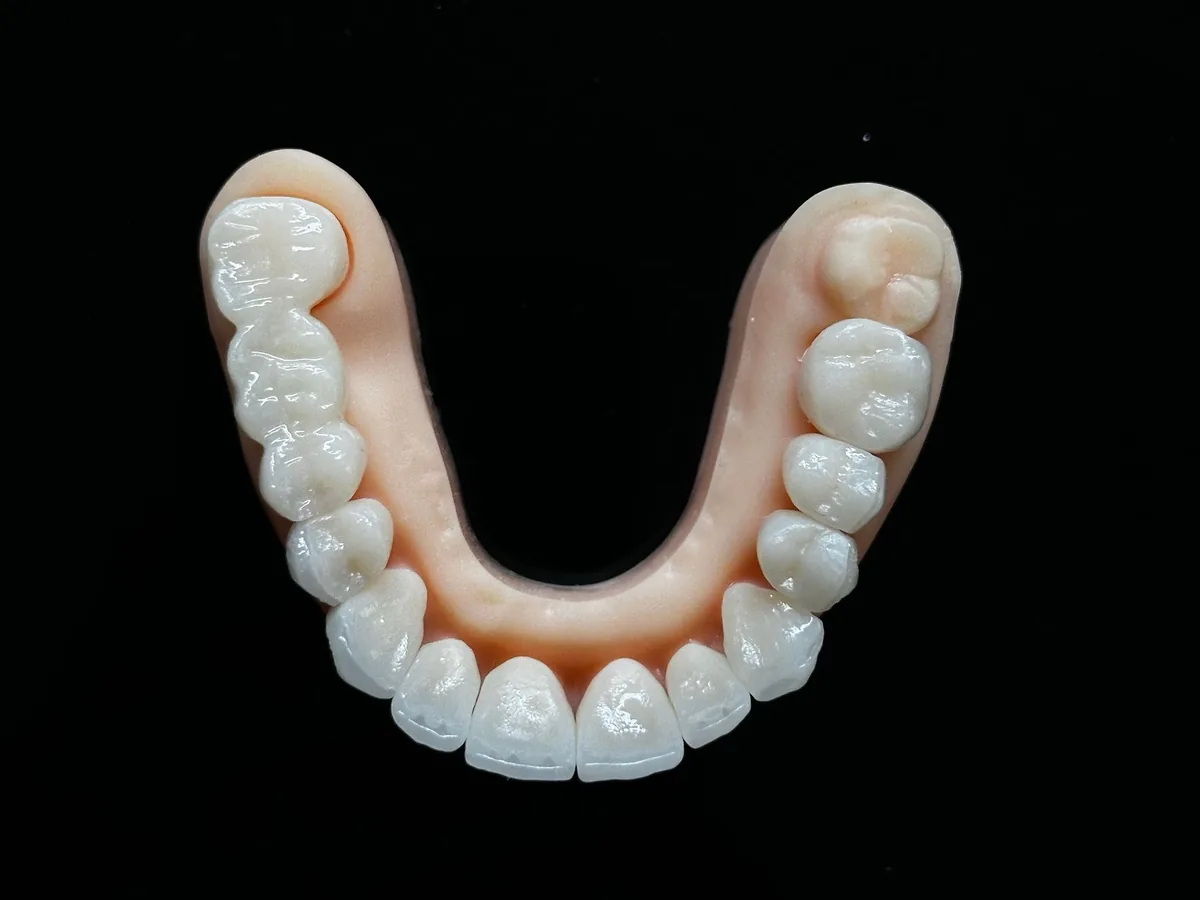
All-on-4 and All-on-6 both give you a fixed bridge of teeth in one jaw. All-on-4 uses four implants, with the back two tilted to use the bone you have and avoid grafts where possible. All-on-6 spreads the bridge over six and needs enough bone for all six. Studies show similar survival, so your bone, bite and health decide.
Published by Vita Smile Dental Clinic Sources (11)
Key takeaways
- All-on-4 tilts the two back implants, usually by about 30°, to avoid grafts where possible and shorten the part of the bridge behind the last implant [1].
- A review of 93 studies found similar implant and bridge survival with fewer than five implants per jaw as with five or more [4].
- In the upper jaw, one review measured more bone loss around four implants than around six: 1.02 mm against 0.46 mm [5].
- Full-arch bridges need upkeep: an estimated 8.6% had no complication at all after 10 years [8].

Clinically reviewed by
Oral and Maxillofacial Surgeon · Implant & Surgical Dentistry Specialist
The basics
What is the difference between All-on-4 and All-on-6?
Both replace all the teeth in one jaw with one fixed bridge on implants, which only your dentist can remove [11]. The difference is how many implants hold it and where they go:
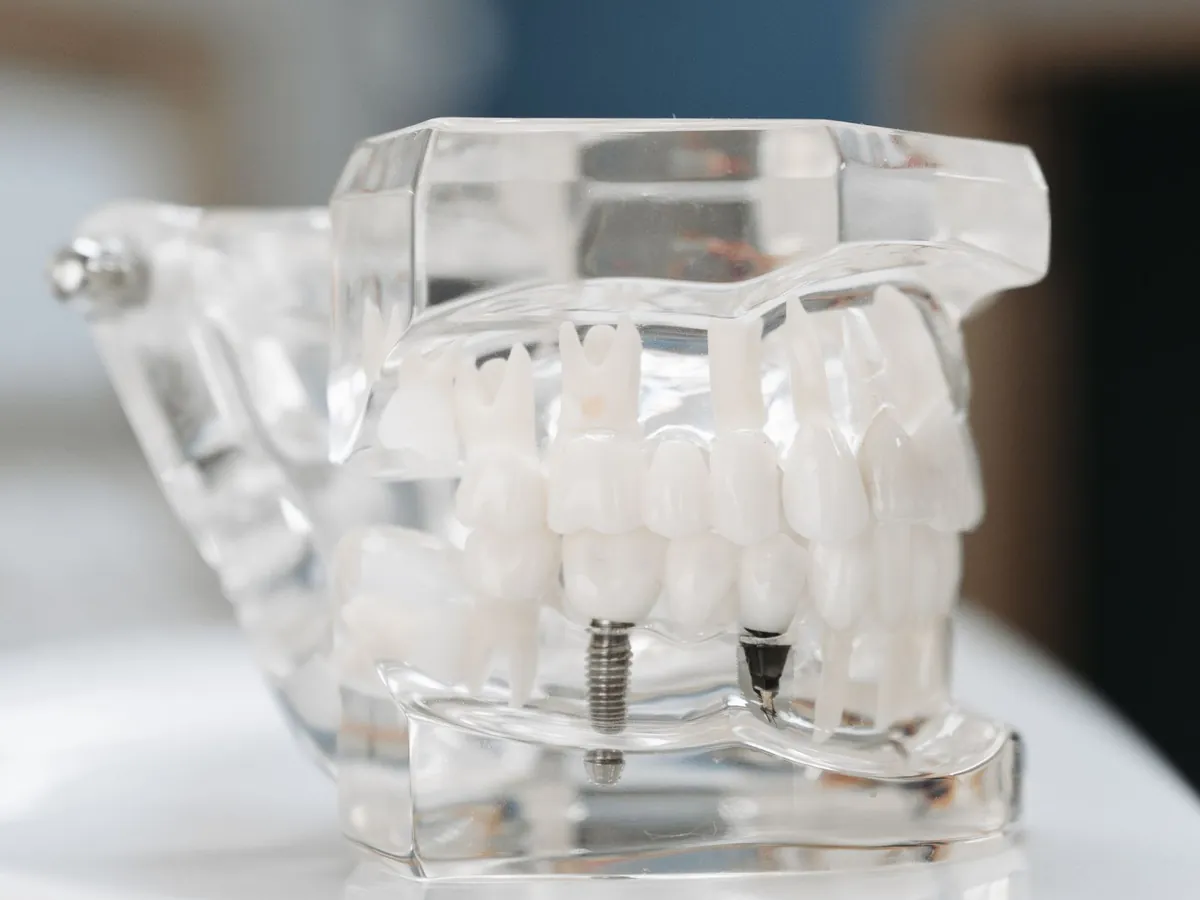
- All-on-4Two straight implants at the front and two tilted at the back, in most studies by about 30° and sometimes up to 45° [1].
- All-on-6Six implants spread along the jaw where the bone allows, for example all upright, or with the back two tilted [5].
Both are ways to get full mouth dental implants. Six is not automatically better, and four is not a shortcut: the right number depends on your bone, which jaw is treated, your bite and your health. Our All-on-4 and All-on-6 pages explain each treatment in full.
Tilted or straight
Why are the back implants tilted in All-on-4?
Bone is often scarce at the back of the jaw: many people who have lost their upper back teeth do not have enough bone below the sinus for implants [10], and in the lower jaw a nerve runs through the bone. Tilting the two back implants so they run in front of the sinus or the nerve [1] means:
- Bone grafts and sinus lifts can often be avoided [1].
- Longer implants can be anchored in the bone that is there [2].
- The cantilever, the part of the bridge behind the last implant, is shorter, which helps spread the biting forces [1][2].
Do tilted implants last as well? A 2021 review of 25 All-on-4 studies found no significant difference from straight implants, with 94–98% still in place after 6 to 11 years [2]. A 2015 meta-analysis of 44 studies agreed overall (1.63% of tilted and 1.81% of straight implants failed), but in upper-jaw studies alone, tilted implants failed significantly more often [3].
Your jawbone
When is a bone graft or sinus lift needed?
Bone is usually the deciding factor. A cone beam CT scan, a 3D X-ray, shows how much bone there is, where the nerves run and the shape of the sinuses [9].
- Less bone at the backAll-on-4 was designed for this [1]. Angled implants next to the sinus can avoid a sinus lift and have shown similar results to conventional implants after five years [10].
- Enough bone along the jawSix implants can be placed without a graft.
- Bone missing where an implant must goIt can be grafted [9]. In the upper back jaw a sinus lift adds height; if the implants are not placed during the lift, the graft usually needs 4–9 months to mature [10].
So where the back bone is thin, six implants can mean a graft and a longer treatment, while four tilted implants may avoid it.
The evidence
Do six implants spread the load better, and last longer?
Biomechanical research suggests that more implants spread the biting forces and may lower stress on the bone, while tilting shortens the cantilever [2][5]. But do patients do better?
- A 2018 review of 93 studies, with 1 to 15 years of follow-up, found no significant difference in implant or bridge survival between fewer than five implants per jaw and five or more [4].
- A 2024 review of 53 upper-jaw studies, with 3.8 years of follow-up on average, found implant survival of 98.5% with four and 97.0% with six, not a significant difference [5]. Bone loss was significantly greater with four, 1.02 mm against 0.46 mm, which the authors linked to the cantilever [5].
- In a randomised trial of 40 patients with upper-jaw bridges, 1 implant had failed in the four-implant group and 6 in the six-implant group after five years, not a significant difference; no bridge failed, and bone loss was similar [6].
The evidence has limits: most studies are retrospective, follow-up is short, and the authors call for longer randomised trials [5][6]. So far, no clear difference in survival has emerged.
Side by side
All-on-4 vs All-on-6 at a glance
Both are fixed bridges with similar survival in reviews [4][5]. They differ in where the implants go, how much bone they need and, in the upper jaw, bone loss around the implants [5].
| All-on-4 | All-on-6 | |
|---|---|---|
| Implant layout | 2 straight at the front, 2 tilted at the back | Spread along the jaw |
| Bone needed | Designed for less bone at the back | Enough bone at six sites |
| Graft or sinus lift | Often avoided by tilting | May be needed where bone is missing |
| Implant survival, upper jaw | 98.5% | 97.0% (not a significant difference) |
| Bone loss, upper jaw | 1.02 mm on average | 0.46 mm on average |
| Temporary teeth | Same day, in selected cases | Same day, in selected cases |
| Final bridge | After 4–6 months in most studies | About 6–8 months after surgery in our typical plan |
Layout, grafts and the All-on-4 bridge: [1][5][9]. Survival and bone loss: review of 53 upper-jaw studies [5]. Temporary teeth and the All-on-6 timeline: our typical plan, confirmed after your examination.
Step by step
Timeline and visits
Both follow the same stages. At Vita Smile, full-arch treatment is done in stages over several months, with more than one visit.
-
Before you travel
Online consultation
Send a recent X-ray or photos. A dentist replies with a personalised plan and a written quote.
-
First visit
Examination and 3D scan
X-rays and usually a cone beam CT scan [9]; four or six implant positions are planned around the nerves and sinuses.
-
Final stage
Final bridge
In most All-on-4 studies it followed after 4–6 months [1]; in our typical All-on-6 plan, about 6–8 months after surgery.
Timelines vary with your bone, any grafts and healing; your surgeon confirms them after examining you.
Everyday care
How do you clean and maintain a full-arch bridge?
The routine is the same for four or six implants. Brush with a soft-bristled toothbrush and a non-abrasive toothpaste, clean under the bridge with floss threaders and interdental brushes, and keep regular check-ups [11]. Smoking, poor oral hygiene, past gum disease and poorly controlled diabetes raise the risk of problems [9].
Expect repairs over the years. In fixed full-arch bridges followed for 9.5 years on average, chipping of the tooth material was the most common problem, and an estimated 8.6% had no complication at all after 10 years; this need not mean the implants have failed [8]. With All-on-4, acrylic bridge fractures were seen mainly in people who grind their teeth [2]. Technical problems such as loose screws did not differ significantly between four and six upper-jaw implants [5].
Making the choice
How does the surgeon decide between four and six?
Research gives no rule that six is always safer [4]. Your surgeon weighs:
- BoneHow much there is and how close the sinus and nerves lie, on the 3D scan [9].
- Which jawIn the upper jaw, one meta-analysis found more failures with tilted implants [3] and one review more bone loss with four [5].
- Your biteGrinding is linked to acrylic bridge fractures [2].
- Health and timeSmoking and poorly controlled diabetes raise risks [9]; a graft adds months of healing [10].
The cost depends on the number of implants, any grafts and the bridge material: see full-arch implant prices and packages. Still weighing fixed teeth against a denture? Read All-on-4 vs dentures. Your dentist confirms the right option after an examination and X-rays.
From our surgeon
“Four or six is a question the 3D scan answers, not a matter of preference. Where there is good bone along the whole arch, six implants share the load of the bridge. Where the bone at the back is thin or the sinus sits low, tilting the two back implants uses the bone that is there and can spare you a graft and months of extra healing. Either way, the bridge has to be one you can clean underneath every day.”
Questions
All-on-4 vs All-on-6: frequently asked questions
Can't find your answer? Our coordinators are happy to help on WhatsApp.
Ask on WhatsAppIs All-on-6 better than All-on-4?
Not for everyone. A review of 93 studies found similar survival with fewer than five implants per jaw as with five or more [4]. One review measured less bone loss around six upper-jaw implants [5], but a randomised trial found no significant difference [6].
Do tilted implants last as long as straight ones?
In most studies, yes: a review of 25 All-on-4 studies found no significant difference [2]. A meta-analysis of 44 studies agreed overall, but found more failures with tilted implants in the upper jaw [3].
Do I need a bone graft for All-on-6?
Not if your scan shows enough bone at all six sites. Missing bone can be grafted, and in the upper back jaw a sinus lift adds height [9]. All-on-4 was designed to avoid grafts where possible [1].
Can I have fixed teeth on the day of surgery?
In selected cases, yes, with either option. When the implants grip the bone firmly (most studies asked for an insertion torque of at least 30 Ncm), a temporary fixed bridge can be fitted straight away; a review of 62 studies found similar survival to later loading [7]. If not, you wear a healing denture while they heal [11].
How long does treatment take?
Plan for more than one visit over several months. In our typical All-on-6 plan the final bridge follows about 6–8 months after surgery; in most All-on-4 studies it came after 4–6 months [1]. A graft adds healing time [10].
How much do All-on-4 and All-on-6 cost?
It depends on the number of implants, any grafts, the implant system, the bridge material and whether one or both jaws are treated. You receive a written quote after a free online assessment. See full-arch implant prices and packages.
Four implants or six? Start with your X-ray
Send a recent X-ray or a few photos of your teeth. A dentist reviews them and replies with a personalised plan and a written quote, free of charge. The quote is confirmed after your examination at the clinic.
Next steps
Related treatments
All-on-4 Dental Implants
Four implants, one fixed bridge: the process, lifespan and risks.
Learn more
All-on-6 Dental Implants
A fixed full-arch bridge on six implants, when the bone allows.
Learn more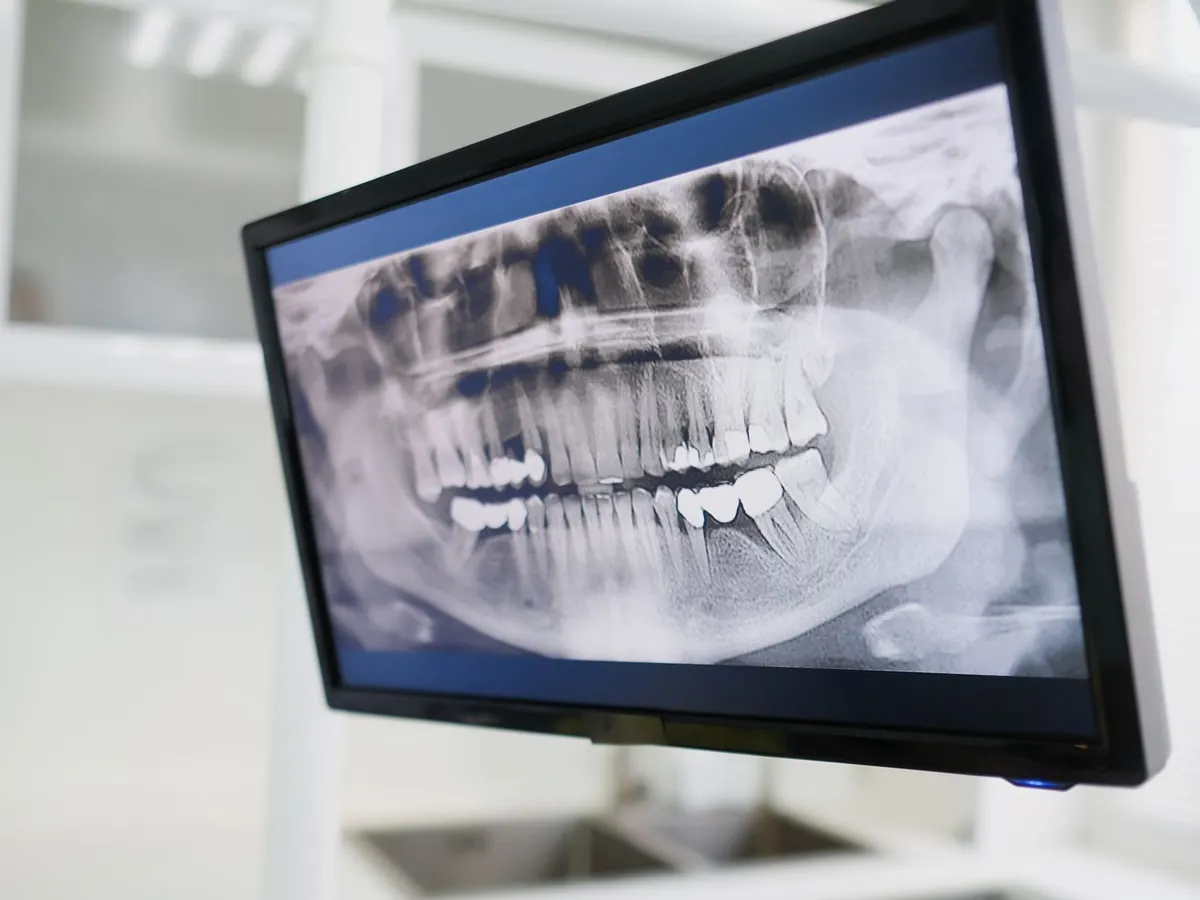
Sinus Lift
Building bone in the upper back jaw before implants.
Learn more
All-on-4 vs Dentures: Which Is Right for You?
Fixed teeth, clip-on overdentures or dentures compared.
Learn moreSources
Studies and patient guides this page is based on.
- [1] Soto-Penaloza D, Zaragozí-Alonso R, Penarrocha-Diago M, Penarrocha-Diago M. The all-on-four treatment concept: Systematic review. Journal of Clinical and Experimental Dentistry, 2017 · pmc.ncbi.nlm.nih.gov
- [2] Gaonkar SH, Aras MA, Chitre V, Mascarenhas K, Amin B, Rajagopal P. Survival rates of axial and tilted implants in the rehabilitation of edentulous jaws using the All-on-four concept: A systematic review. Journal of Indian Prosthodontic Society, 2021 · pmc.ncbi.nlm.nih.gov
- [3] Chrcanovic BR, Albrektsson T, Wennerberg A. Tilted versus axially placed dental implants: a meta-analysis. Journal of Dentistry, 2015 · doi.org
- [4] Daudt Polido W, Aghaloo T, Emmett TW, Taylor TD, Morton D. Number of implants placed for complete-arch fixed prostheses: A systematic review and meta-analysis. Clinical Oral Implants Research, 2018 · doi.org
- [5] Sharaf MA, Wang S, Mashrah MA, Xu Y, Haider O, He F. Outcomes that may affect implant and prosthesis survival and complications in maxillary fixed prosthesis supported by four or six implants: A systematic review and meta-analysis. Heliyon, 2024 · pmc.ncbi.nlm.nih.gov
- [6] Tallarico M, Meloni SM, Canullo L, Caneva M, Polizzi G. Five-Year Results of a Randomized Controlled Trial Comparing Patients Rehabilitated with Immediately Loaded Maxillary Cross-Arch Fixed Dental Prosthesis Supported by Four or Six Implants Placed Using Guided Surgery. Clinical Implant Dentistry and Related Research, 2016 · doi.org
- [7] Papaspyridakos P, Chen CJ, Chuang SK, Weber HP. Implant loading protocols for edentulous patients with fixed prostheses: a systematic review and meta-analysis. International Journal of Oral & Maxillofacial Implants, 2014 · doi.org
- [8] Papaspyridakos P, Chen CJ, Chuang SK, Weber HP, Gallucci GO. A systematic review of biologic and technical complications with fixed implant rehabilitations for edentulous patients. International Journal of Oral & Maxillofacial Implants, 2012 · pubmed.ncbi.nlm.nih.gov
- [9] Dental implants — Leeds Dental Institute, Leeds Teaching Hospitals NHS Trust · leedsth.nhs.uk
- [10] Sinus lift procedures — Cambridge University Hospitals NHS Foundation Trust (patient information) · cuh.nhs.uk
- [11] Implant-Supported Dentures — Cleveland Clinic · my.clevelandclinic.org