
I visited Vita Smile Dental Clinic for implants and a smile makeover, and I couldn’t be happier with the outcome. Dr. Vildan and her team were warm, knowledgeable, and extremely detail-oriented. The clinic itself is spotless and modern, and they made sure I was comfortable every step of the way. They even helped with transportation and accommodation, which made the whole experience stress-free. My new smile looks amazing — I feel more confident than ever. If you're thinking about dental treatment in Turkey, Vita Smile is a fantastic choice. Thank you for everything!
Implant dentistry
Sinus Lift
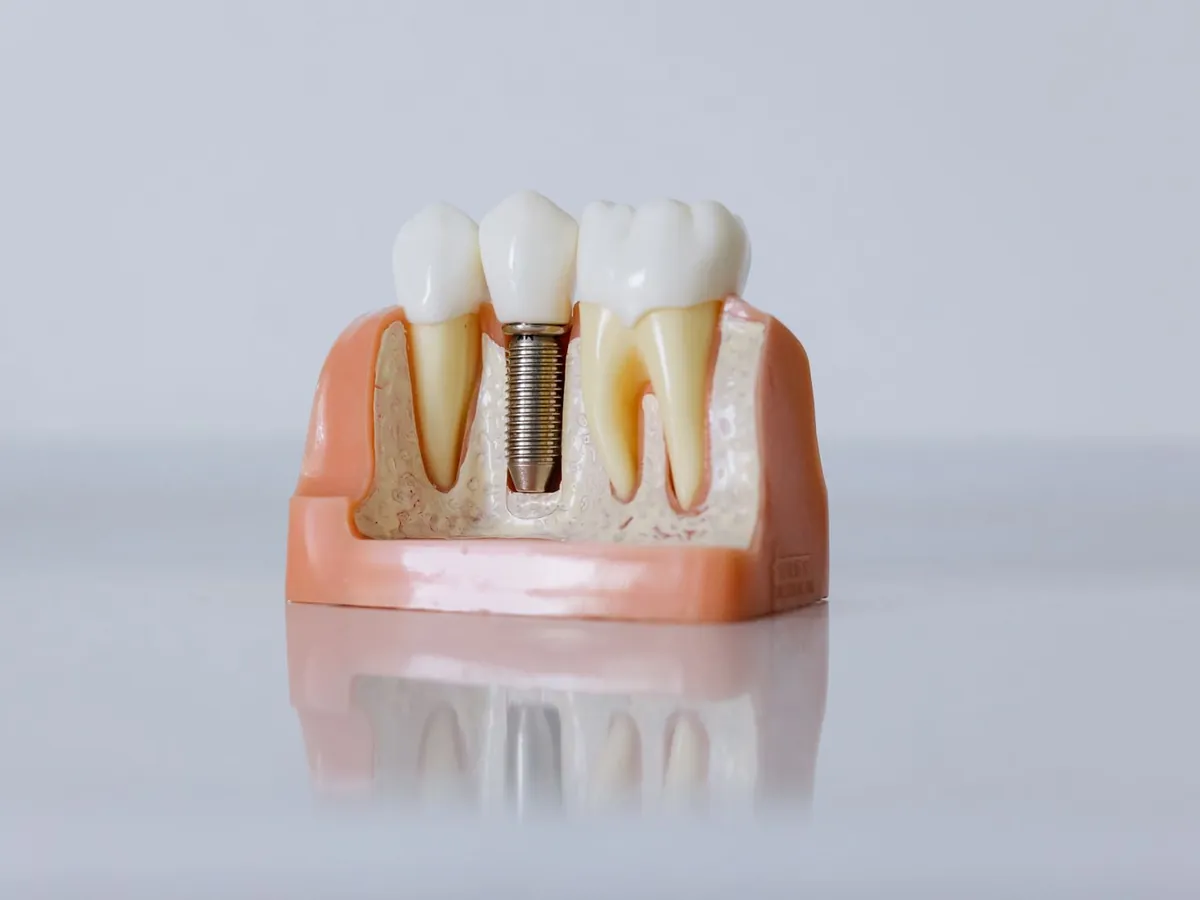
A sinus lift is surgery that adds bone to the upper back jaw so that dental implants can be placed there. The sinus lining is gently raised and graft material is placed beneath it, through a small window in the side of the jaw or through the implant site. Implants go in during the lift or after the graft heals.
Published by Vita Smile Dental Clinic Sources (6)
Key takeaways
- After upper back teeth are lost, the bone shrinks and the sinus can expand into the space, leaving too little height for an implant [1][2].
- When implants are not placed during the lift, the graft usually needs 4–9 months to mature first [1].
- In 11 long-term studies, about 0.43% of implants in lifted sinuses were lost per year, whether placed during the lift or later [5].
- When some bone remains, short implants are an alternative: a Cochrane review found no clear difference in failures after one year, but more complications with sinus lifts [4].
- Do not blow your nose for two weeks, and wait at least two weeks before flying [1][6].
At a glance
- Area treated
- Upper back jaw (premolars, molars)
- Approaches
- Lateral window or transcrestal
- Anaesthesia
- Usually local
- Surgery time
- 45 minutes to 2 hours
- Graft healing
- Usually 4–9 months
- Before flying
- At least 2 weeks
Clinically reviewed by
Oral and Maxillofacial Surgeon · Implant & Surgical Dentistry Specialist
The basics
What is a sinus lift?
The maxillary sinuses are air-filled spaces beside the nose, above the upper premolar and molar teeth. A thin lining, the sinus membrane, covers the bone inside them [1]. In a sinus lift, also called sinus augmentation or sinus floor elevation, this lining is gently raised and graft material is placed underneath, so that bone forms where an implant needs to go [1][3].
Why is the bone missing? After a back tooth is removed, the bone around the socket shrinks, most of all in the upper back jaw, and the sinus tends to expand downwards into the space, a process called pneumatisation [2]. This can leave too little bone between the mouth and the sinus to hold an implant [2][4], which is why the upper back jaw has long been one of the hardest places to place implants [3].
There are two main approaches:
- Lateral window (external or "open" sinus lift): a small window is made in the side of the jaw, from the cheek side; the lining is pushed up and graft material is packed below it [1].
- Transcrestal (internal, crestal or osteotome sinus lift): the sinus floor is gently tapped up through the hole prepared for the implant, which is placed at the same time. It is used where only around 3 mm of extra height is needed [1].
The graft is a scaffold that your own bone grows into. It can come from your own body, a human donor, an animal or a synthetic source; a widely used option is sterilised bovine (cattle) bone, sometimes covered by a dissolvable membrane [1]. If you have concerns about animal-derived products, raise them before surgery [1].
A sinus lift is a step within dental implant treatment, for a single tooth or as part of full mouth dental implants.
Is it right for you?
Who needs a sinus lift?
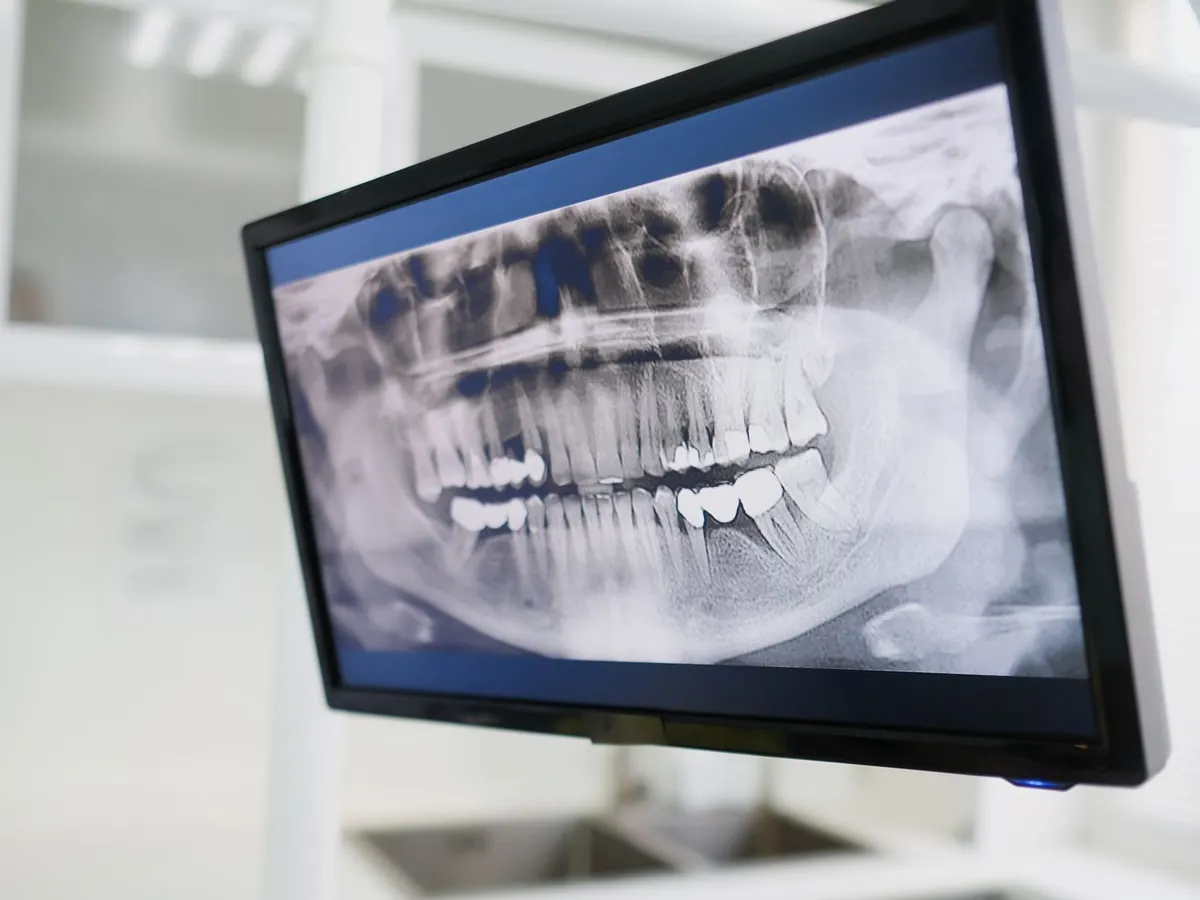
A sinus lift is for adults who want implants in the upper back jaw but lack the bone under the sinus to hold them [1]. Whether you need one, and which approach, depends on how much bone is left, measured on X-rays or a scan. It is elective, and the alternatives should be discussed first [1].
A sinus lift may suit you if
Ask us about alternatives if
- Some bone remains: a shorter implant may avoid the lift [1][4]
- Most upper teeth are missing: angled implants, as in All-on-4, can avoid the sinus [1]
- You would rather avoid surgery: a bridge or a denture may replace the teeth [1]
- You must fly home soon after surgery: plan your travel dates first [6]
Step by step
How a sinus lift works
Most sinus lifts are done under local anaesthesia, without a hospital stay; from the lift to the final tooth usually takes 6 to 12 months [1].
-
Before you travel
Online consultation
Send a recent X-ray or photos of your teeth. A dentist replies with a personalised plan and a written quote, confirmed after the examination.
-
Assessment
Examination and scans
The bone under the sinus is measured on X-rays or a 3D scan, and your surgeon explains the approach and the alternatives [1].
-
Surgery
Lifting the sinus floor
Through a cut in the gum, the lining is raised via a side window or the implant site and the graft is placed. It takes 45 minutes to 2 hours [1].
-
First weeks
Recovery
Swelling peaks after about two days; most people feel back to normal after two to three weeks. Do not blow your nose for two weeks [1].
-
Usually 4–9 months
The graft matures
The graft knits with your own bone; the time depends on how much bone was needed and the material [1].
-
Final stage
Implants and new teeth
Implants not placed during the lift go in now; the crown or bridge follows once they have bonded with the bone.
Timelines depend on your bone, the approach and the graft; your surgeon confirms them after examining you.
Find out whether you need a sinus lift
Send a recent X-ray of your upper jaw. A dentist reviews it and replies with a personalised plan and a written quote, free of charge, confirmed after the examination.
Compare your options
Lateral window vs transcrestal sinus lift vs short implants
The choice depends on how much bone is left under the sinus. A Cochrane review found no technique that reduced failures compared with another, and no clear difference between a sinus lift and short implants after one year, but more complications with the lift [4].
| Lateral window sinus lift | Transcrestal sinus lift | Short implants | |
|---|---|---|---|
| How it is done | A small window in the side of the jaw | The sinus floor is tapped up through the implant site | A shorter implant in the bone already there |
| When it is used | Little bone under the sinus | Some bone; around 3 mm of extra height needed | Enough bone without a lift |
| Implant placement | Same time if some bone remains; otherwise after 4–9 months | At the same time | No graft to wait for |
| Membrane tear | 19% chance | 3.8% chance | None: no sinus surgery |
| Infection | 2.9% chance | 0.8% chance | No sinus graft |
| Main trade-off | Builds more height, but a larger operation | A smaller operation for a small gain in height | No graft, but failure risk rises as implants get shorter |
Techniques, timing and risks: Cambridge University Hospitals NHS [1]. Short implants: trials of 5–8.5 mm implants vs sinus lifts in bone 4–9 mm high [4].
Timing
One stage or two: when can implants carry teeth?
Whether the implant goes in on the day of the lift depends on the bone you have:
- One stageWith some bone left, the implant is placed in the same surgery, with either approach [1].
- Two stagesWith little or no bone, the graft heals first, usually for 4–9 months, and the implant is placed in a second operation [1].
The timing does not seem to change the long-term result. A 2019 review of 11 studies of lateral window lifts, each with at least five years of follow-up, found no significant difference in implant loss between implants placed during the lift and those placed later, nor between the patient's own bone and bone substitutes; implant loss averaged about 0.43% a year [5].
Either way, the new tooth is fitted only once the implant has bonded with the bone: from the lift to the final crown or bridge usually takes 6 to 12 months, sometimes longer [1]. If you travel for treatment, a two-stage plan usually means more than one trip.
Before you decide
Risks and aftercare of a sinus lift
A sinus lift is a common procedure [1], but it is surgery next to the sinus. The figures below come from a Cambridge University Hospitals NHS patient leaflet [1]:
- Membrane tear: the main risk during surgery, with a 19% chance in the lateral window approach and 3.8% in the transcrestal one. A tear is usually stitched or patched; if not, the lift is stopped and can be redone once the lining has healed [1].
- Sinus symptoms and infection: the sinus may feel full or blocked for some weeks. Infection has a 2.9% chance with the lateral approach and 0.8% with the transcrestal one; rarely, the graft has to be removed [1].
- Graft failure: in 1.9% of lateral window lifts no graft remains after healing, more often in smokers; in 1%, too little bone forms for an implant [1].
- Rare but serious: numbness of the cheek, upper gums or teeth, usually temporary but very rarely permanent, or an opening between the sinus and the mouth [1].
Aftercare protects the graft:
- No nose blowing: avoid blowing your nose for two weeks [1].
- Medicines: take any prescribed antibiotics or decongestants, and menthol steam inhalations if advised [1].
- Warning signs: contact your surgeon if swelling or pain worsens after two days, bleeding does not stop, you develop a fever, or you think graft material moved after a sneeze [1].
- Flying: wait at least two weeks and until you have no sinus symptoms, as pressure changes in flight can inflame the sinus and put the graft at risk; travelling home by land avoids this [6].
From our surgeon
“A missing upper molar can leave surprisingly little bone under the sinus. Before I suggest a sinus lift, I measure that bone and ask whether a shorter or angled implant could do the job safely without a graft. When it cannot, a sinus lift is a well-established way to build the bone. I explain which approach fits your case and how long the graft needs to mature, and I ask for your travel dates early, because the sinus needs quiet days after surgery.”
Treatment abroad
Choosing a clinic in Turkey for a sinus lift
A sinus lift adds a healing stage and limits on flying [1][6], so the questions go beyond the surgery itself. Before you book, ask:
- Who will perform the sinus lift, and what is their training in oral surgery?
- How was my bone height measured, and why does my case need a lift rather than a shorter or angled implant?
- Which approach and which graft material are planned, and is the material of animal origin [1]?
- Will the implants go in during the lift, or on a later trip once the graft has healed?
- When can I fly home, and who checks my sinus and stitches once I am home [6]?
At Vita Smile, sinus lifts, like all implant treatment, are planned by our oral and maxillofacial surgeon, Dr. Saffet Ekinci. You can meet our dentists or start with a free online consultation.
Questions
Sinus lift: frequently asked questions
Can't find your answer? Our coordinators are happy to help on WhatsApp.
Ask on WhatsAppHow much does a sinus lift cost in Turkey?
It depends on the approach, the graft material, whether the implants go in at the same time and how many teeth are replaced. After a free online assessment you receive a personalised plan and a written quote, confirmed after the examination. See dental implant prices and packages.
Is a sinus lift painful?
It is normally done under local anaesthetic and is not normally painful [1]. Afterwards, simple painkillers such as ibuprofen and paracetamol usually control the pain; swelling peaks after about two days [1].
How long after a sinus lift can I fly?
A 2023 British Dental Journal article on dental tourism advises waiting at least two weeks and flying only once you have no sinus symptoms, because pressure changes can inflame the sinus and put the graft at risk [6]. Where possible, it suggests travelling home by land [6].
How long after a sinus lift can implants be placed?
With some bone left, the implant is often placed during the lift. If not, the graft usually needs 4–9 months to mature first [1]. From the lift to the final tooth usually takes 6 to 12 months [1].
Is a sinus lift necessary for implants?
Not always. With some bone left, a shorter implant may be used, and angled implants beside the sinus, as in All-on-4, can avoid a lift [1][4]. Zygomatic implants, long implants anchored in the cheekbone, are another option, but the surgery is more complicated and not every surgeon offers it [1].
What our patients say
Read what our patients say about us on Google and Trustpilot.
Free consultation
Free initial consultation
Leave your details and a treatment coordinator will contact you to arrange your free online consultation.
- We get in touchWe reply to you on WhatsApp.
- You share photos or an X-rayA dentist reviews them before your consultation.
- You receive your plan & quoteItemised and free, with no obligation to book.
Sources
Studies and patient guides this page is based on.
- [1] Sinus lift procedures — Cambridge University Hospitals NHS Foundation Trust (patient information, version 3, approved July 2024) · cuh.nhs.uk
- [2] Mahardawi B, Jiaranuchart S, Arunjaroensuk S, Dhanesuan K, Mattheos N, Pimkhaokham A. The clinical benefit of alveolar ridge preservation in the posterior maxilla: a systematic review and meta-analysis. Scientific Reports, 2025 · doi.org
- [3] Dental Implant Procedures — American Academy of Periodontology · perio.org
- [4] Esposito M, Felice P, Worthington HV. Interventions for replacing missing teeth: augmentation procedures of the maxillary sinus. Cochrane Database of Systematic Reviews, 2014 · doi.org
- [5] Raghoebar GM, Onclin P, Boven GC, Vissink A, Meijer HJA. Long-term effectiveness of maxillary sinus floor augmentation: A systematic review and meta-analysis. Journal of Clinical Periodontology, 2019 · doi.org
- [6] Felkai PP, Nakdimon I, Felkai T, Levin L, Zadik Y. Dental tourism and the risk of barotrauma and barodontalgia. British Dental Journal, 2023 · doi.org