
I visited Vita Smile Dental Clinic for implants and a smile makeover, and I couldn’t be happier with the outcome. Dr. Vildan and her team were warm, knowledgeable, and extremely detail-oriented. The clinic itself is spotless and modern, and they made sure I was comfortable every step of the way. They even helped with transportation and accommodation, which made the whole experience stress-free. My new smile looks amazing — I feel more confident than ever. If you're thinking about dental treatment in Turkey, Vita Smile is a fantastic choice. Thank you for everything!
Restorative dentistry
Full Mouth Zirconia Crowns
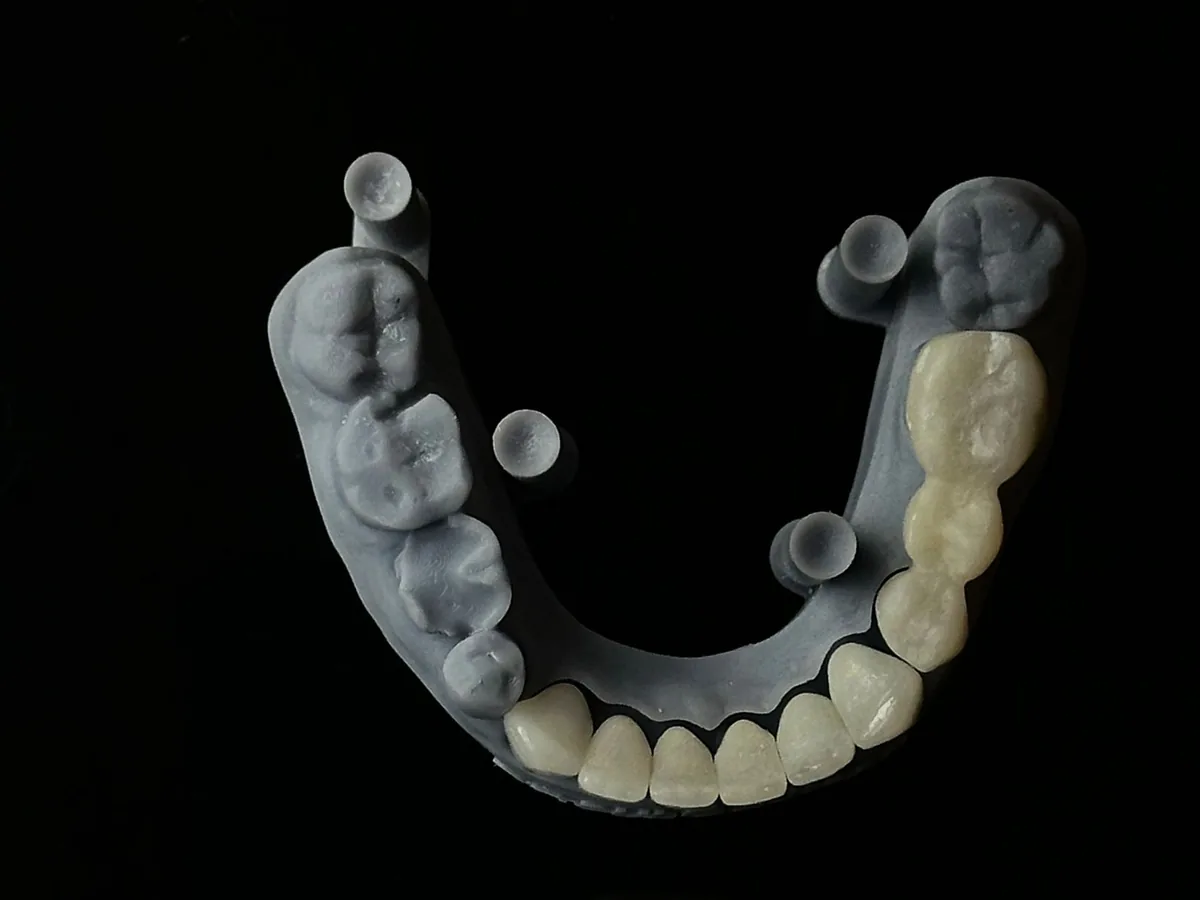
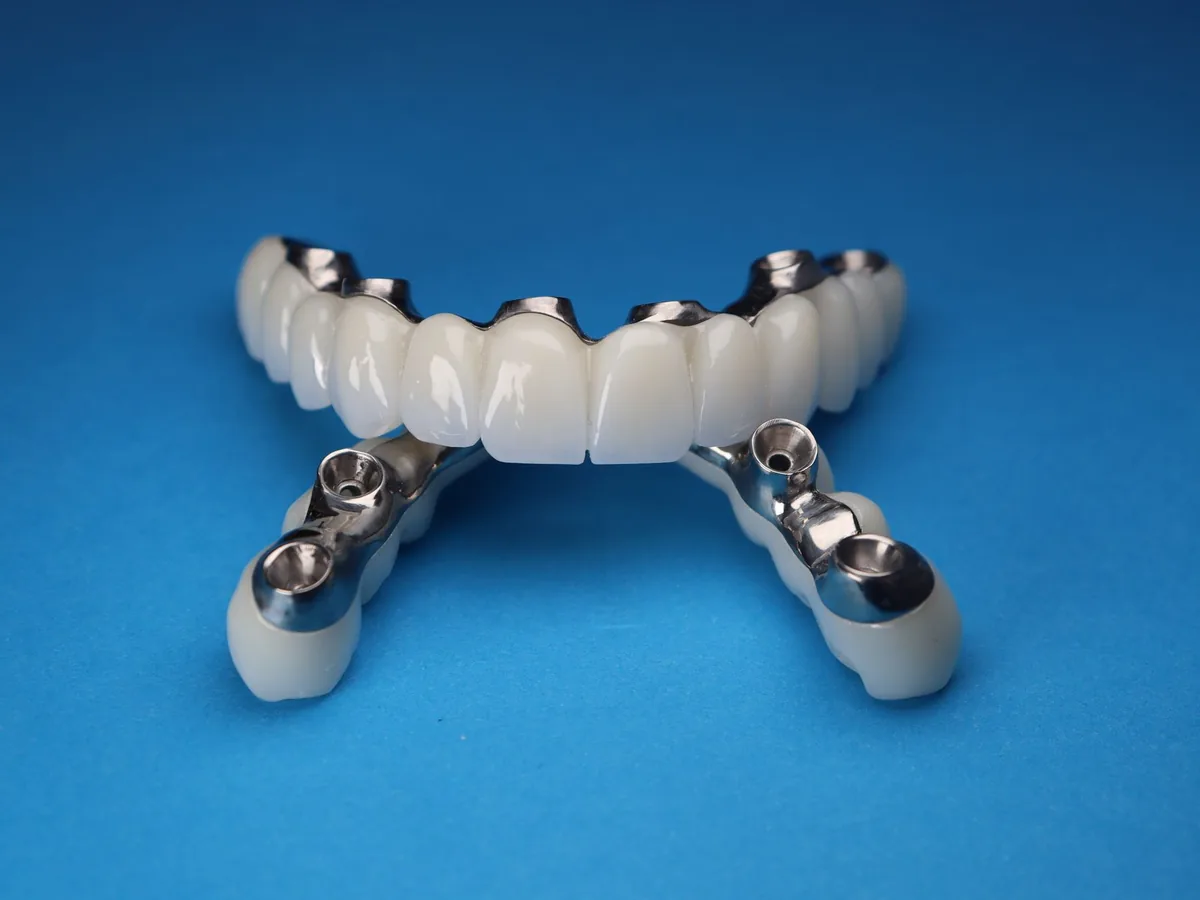
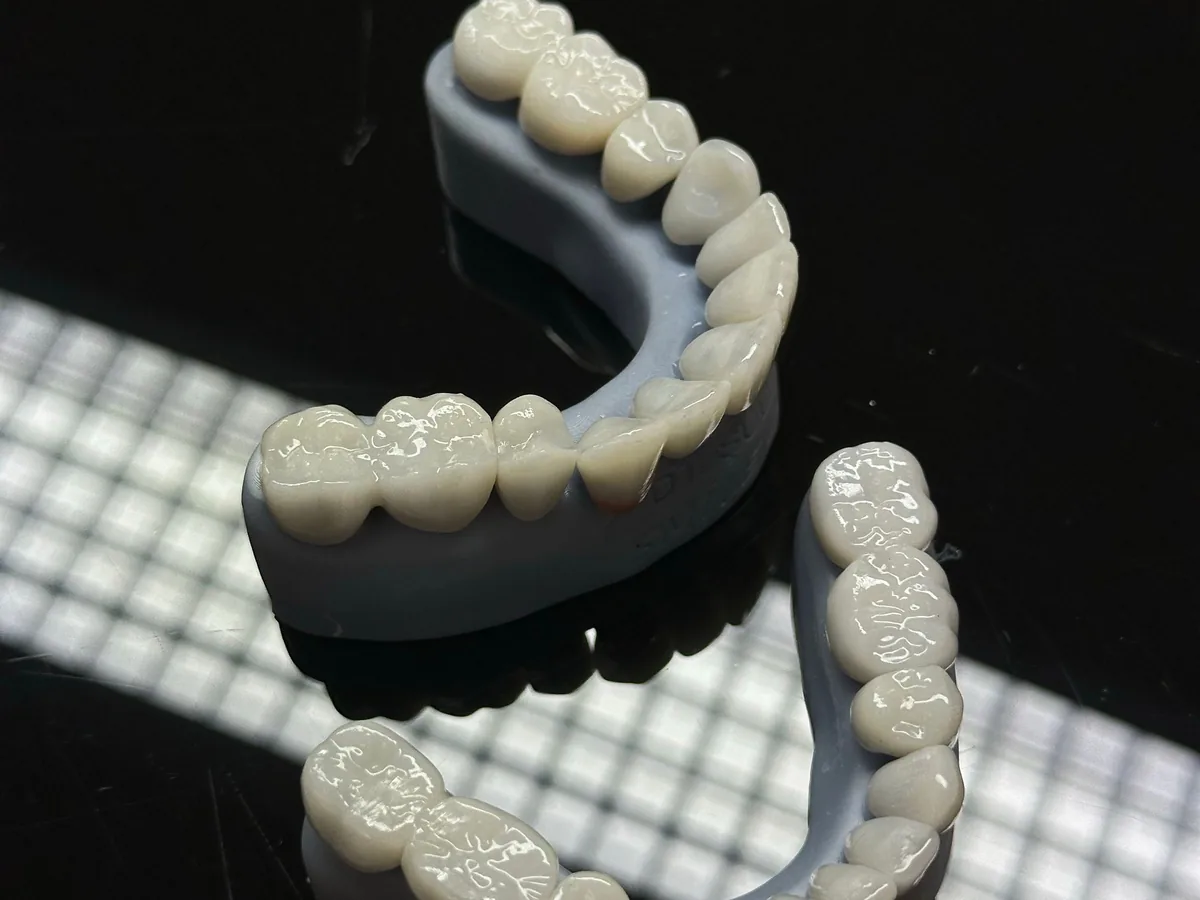
Full mouth zirconia crowns are a treatment plan that covers all or most of your teeth with zirconia crowns, designed together as one bite. It is a rehabilitation rather than a cosmetic shortcut: it suits teeth that are severely worn, broken or heavily restored, often with a change to the bite, and it is usually carried out in stages.
Published by Vita Smile Dental Clinic Sources (6)
Key takeaways
- A full mouth crown plan is for teeth that need full coverage: damaged, heavily filled, root-treated, worn or cracked [1].
- For worn teeth, European experts advise delaying restorations as long as possible, then choosing the most conservative option [2].
- A 2025 review of 104 publications found no reported jaw-joint or other adverse responses after the bite was raised [3].
- In a 2026 review of 64 studies, 96.8% of single monolithic zirconia crowns were still in place after five years [4].
- Zirconia can wear the opposing natural teeth [5], and every crowned tooth is shaped for good [1], so each crown needs a clear reason.
At a glance
- Also called
- Full mouth reconstruction
- Material
- Zirconia, monolithic or layered
- Main reasons
- Severe wear, many broken or heavily filled teeth
- Tooth preparation
- Every crowned tooth is shaped; not reversible
- Trial phase
- Often, in temporary crowns
- Single monolithic crowns at 5 years
- 96.8% still in place
- Warranty at Vita Smile
- 10 years, in writing
- Visits
- At least 2; laboratory 1–2 weeks
- Zirconia at Vita Smile
- VITA
Clinically reviewed by
Prosthodontics & Aesthetic Dentistry · Restorative Dental Care
The basics
What are full mouth zirconia crowns?
A crown is a cap made to measure for one tooth; it covers the tooth and restores its shape, strength and appearance [1]. In a full mouth plan, crowns go on all or most of the teeth in one or both jaws and are designed together, so the new teeth meet in a balanced bite. Dentists call this a full mouth reconstruction. Our zirconium crowns page covers the material, and dental crowns covers crowns in general.
A good plan chooses tooth by tooth:
- A crown where the tooth is broken, heavily filled, root-treated, worn or cracked [1].
- An onlay or a veneer where much of the tooth is intact. In full mouth rehabilitations that raised the bite, composite resin and lithium disilicate were the most common materials [3].
- An implant or bridge where a tooth is missing. When most teeth are missing, see full mouth dental implants.
- No treatment for healthy teeth that already fit the planned bite.
Why the bite matters: severe wear can leave too little room for new restorations. Raising the bite (the vertical dimension of occlusion) slightly creates that room. Dentists do it to show more tooth, restore the way the front teeth guide your bite, reduce drilling on the biting surfaces and avoid root canal treatment [3].
Is it right for you?
Who are full mouth zirconia crowns for?
A full mouth crown plan suits adults whose teeth need full coverage across much of the mouth: severe wear, many broken, heavily filled or root-treated teeth, or a bite that has to be rebuilt [1][3]. It does not suit healthy teeth that only need a new colour, and the cause of wear is controlled first [2].
A full mouth plan may suit you if
- Many teeth are severely worn, with sensitivity, discomfort, chewing problems or a smile you dislike [3]
- Several teeth are broken, cracked, heavily filled or root-treated [1]
- Your bite needs to be raised or rebalanced to make room for restorations [3]
- Your gums are healthy, or gum disease has been treated first
Ask us about alternatives if
- Your teeth are healthy and you only want them whiter or more even: whitening, bonding or veneers remove less tooth
- Acid, reflux or grinding is still wearing your teeth: the cause comes first [2]
- Most of your teeth are missing or cannot be saved: implants may be the better base
- You mainly want a new look: see over-treatment on our Hollywood smile page
Step by step
How a full mouth crown plan is carried out
Each crown is shaped, scanned, protected by a temporary and then fitted [1]. In a full mouth plan the bite is designed first and often tested in temporary crowns [3].
-
Before you travel
Online consultation
Send photos and a recent X-ray. A dentist replies with a first plan.
-
First visit
Examination and records
Teeth, gums, bite and jaw joints are checked with X-rays and scans; the cause of any wear is looked for [2].
-
Planning
Digital bite design
Bite height, tooth shapes and each restoration are planned digitally. You see the design before any tooth is prepared.
-
At home
Aftercare and night guard
Brush twice a day, clean between your teeth and keep your check-ups [1]. If you grind, a night guard is planned with your crowns.
Stages, visits and timing depend on your plan; your dentist confirms them after examining you.
Find out whether you really need a full mouth plan
Send a few photos or a recent X-ray. A dentist reviews them and replies with a personalised plan, free of charge; your written quote is confirmed after the examination.
Compare your options
Full mouth zirconia vs e-max crowns vs veneers with selected crowns
In a 2026 review, zirconia and lithium disilicate single crowns reached five-year survival comparable to metal-ceramic crowns [4]; the differences are wear, chipping and how much tooth is removed. Porcelain-fused-to-metal is covered on our full mouth porcelain crowns page.
| Full mouth zirconia crowns | Full mouth lithium disilicate (e-max) crowns | Veneers on front teeth, crowns only where needed | |
|---|---|---|---|
| Tooth removed | Every crowned tooth is shaped all round | Every crowned tooth is shaped all round | Less: veneers cover only the front surface; crowns only where a tooth needs one |
| Single crowns in place at 5 years | 96.8% monolithic, 97.3% layered | 98.5% monolithic, 95.7% layered | Depends on the restoration chosen for each tooth |
| Chipping | Fewer chips in monolithic crowns | Fewer chips in monolithic crowns | Depends on the materials used |
| Wear on opposing natural teeth | Significant in clinical studies; polishing helps | Also significant in clinical studies | Depends on the crown material at the back |
Survival and chipping: a 2026 systematic review of 64 studies of single crowns on natural teeth [4]; no review has pooled results for full mouth zirconia plans. Wear: a 2026 review of nine clinical studies with 6 to 24 months of follow-up [5].
Before you decide
Risks and downsides of a full mouth crown plan
A full mouth plan multiplies the trade-offs of a single crown:
- Irreversible preparationEvery crowned tooth is shaped for its crown [1] and will always need a covering.
- Nerve problemsEndodontic complications, sensitivity and persisting pain are reported under zirconia restorations [6]; a crowned tooth can later need root canal treatment.
- Bite problemsA new bite can take getting used to. No jaw-joint problems were reported after the bite was raised, but most of that evidence comes from non-comparative studies [3]; temporaries let the bite be adjusted first.
- Wear of opposing teethMonolithic zirconia wore opposing enamel more than natural tooth contact did; polished surfaces are less abrasive than glazed ones [5]. For severe wear, the review authors suggest metal-ceramic crowns or properly polished zirconia [5].
- Chipping and fractureChipping was the most common technical problem with zirconia, followed by framework fracture and crowns coming loose [6]; monolithic crowns chip significantly less [4].
- Grinding and upkeepPeople who grind were rarely studied, and the long-term effect of hard zirconia on the chewing system is unclear [6]. Plan a night guard if you grind, and clean around every crown edge [1].
From our dentist
“In a full mouth plan the bite is the real work; the crowns are how we hold it. When the bite has to be raised or rebalanced, I test it in temporary crowns first: you chew, speak and smile with the new shape, and we adjust it together before anything is made in zirconia. Where zirconia meets your natural teeth, its surface must be smoothly polished, because it touches them every day. Check-ups, careful cleaning and a night guard if you grind are part of the plan from the start.”
Treatment abroad
Choosing a clinic in Turkey for full mouth zirconia crowns
A full mouth plan is a large, permanent decision, so the examination matters more than the number of crowns in a package. Before you book, ask:
- Why does each tooth need a crown, and which teeth could keep their own enamel?
- What is causing my wear, and how will it be controlled?
- Will my new bite be tested in temporary crowns, and how many stages and stays does the plan need?
- Is the zirconia named in my written quote, and what happens if a crown chips or comes loose at home?
Here is what we can tell you now: the materials for your case are named in your written quote, and our zirconia crowns use VITA zirconia with a written 10-year warranty against manufacturing and workmanship defects, provided you attend your check-ups. Full mouth plans are made by Dr. Vildan Aktamış, who reviewed this page.
Questions
Full mouth zirconia crowns: frequently asked questions
Can't find your answer? Our coordinators are happy to help on WhatsApp.
Ask on WhatsAppHow much does a full set of zirconia crowns cost in Turkey?
It depends on how many teeth need crowns, whether they are monolithic or layered, and any treatment needed first, such as root canals or implants. After a free online assessment you receive a personalised plan; the written quote is confirmed after the examination. See crown prices and packages.
How many crowns do you need for a full mouth?
There is no fixed number. Packages of 20 or 28 crowns describe a product, not a diagnosis. Each tooth is assessed on its own: some need a crown, some an onlay or a veneer, and some nothing at all.
How long do full mouth zirconia crowns last?
Studies mostly report five-year results for single crowns: in a 2026 review, 96.8% of monolithic and 97.3% of layered zirconia crowns were still in place [4]. No review has pooled results for full mouth zirconia plans, and longer-term data on monolithic zirconia are still limited [6].
How long do you have to stay in Turkey for full mouth crowns?
A crown usually takes two visits, one to shape the tooth and one to fit it [1], and full mouth plans are often staged [3]. Your written plan states the number of trips and the length of each stay.
Is it worth going to Turkey to get your teeth done?
It can be, when the plan is built around your teeth rather than a package of crowns: a licensed clinic, an examination first and a clear reason for every crown. Shaping cannot be undone [1]; our Hollywood smile page explains the 'Turkey teeth' problem.
What our patients say
Read what our patients say about us on Google and Trustpilot.
Free consultation
Free initial consultation
Leave your details and a treatment coordinator will contact you to arrange your free online consultation.
- We get in touchWe reply to you on WhatsApp.
- You share photos or an X-rayA dentist reviews them before your consultation.
- You receive your plan & quoteItemised and free, with no obligation to book.
Sources
Studies and patient guides this page is based on.
- [1] What are dental crowns? — Oral Health Foundation · dentalhealth.org
- [2] Loomans B, Opdam N, Attin T, Bartlett D, Edelhoff D, et al. Severe Tooth Wear: European Consensus Statement on Management Guidelines. Journal of Adhesive Dentistry, 2017 · doi.org
- [3] Chantler J, Strasding M, Strauss F, Ioannidis A, Naenni N. Importance of an Evaluation Phase When Increasing the Occlusal Vertical Dimension: A Systematic Review. Journal of Esthetic and Restorative Dentistry, 2025 · pmc.ncbi.nlm.nih.gov
- [4] Pjetursson BE, Pitta J, Balet A, Bjarnadottir GR, Sailer I, Romandini P. A Systematic Review and Meta-analysis Evaluating the Survival, Failure, and Complication Rates of Metal-Ceramic, Veneered, and Monolithic All-Ceramic Tooth-Supported Single Crowns — Part 1. International Journal of Prosthodontics, 2026 · doi.org
- [5] Rosa CDDRD, Bento VAA, Duarte ND, et al. Comparative Wear of Opposing Natural Enamel by Different Ceramic Materials in Fixed Dental Protheses: A Systematic Review and Meta-Analysis. Dentistry Journal, 2026 · pmc.ncbi.nlm.nih.gov
- [6] Laumbacher H, Strasser T, Knüttel H, Rosentritt M. Long-term clinical performance and complications of zirconia-based tooth- and implant-supported fixed prosthodontic restorations: A summary of systematic reviews. Journal of Dentistry, 2021 · doi.org