
Gum care

Gum Disease Treatment (Periodontics)

Gum disease treatment (periodontics) removes the plaque and tartar that inflame your gums and, if the disease has reached the bone, cleans the roots below the gumline. Early gum disease, gingivitis, can be reversed. Periodontitis can be controlled with deep cleaning, sometimes surgery, and regular maintenance. Treatment starts with a gum examination and X-rays.

Published by Vita Smile Dental Clinic Sources (6)

A dental mirror and probe on a dark background

Key takeaways

  • Gum disease is caused by plaque; gums that bleed when you brush are a typical sign [1].
  • Gingivitis is reversible [2]; periodontitis destroys the bone that holds the teeth [2].
  • Periodontitis is treated in steps: daily care, deep cleaning, surgery only where deep pockets remain, then maintenance every 3 to 12 months [4].
  • In people with diabetes, gum treatment lowered HbA1c by 0.43 percentage points after 3 to 4 months [5].
  • A history of periodontitis raises the risk of inflammation around implants [6], so gums are treated first.

At a glance

Early stage
Gingivitis: reversible
Advanced stage
Periodontitis: can be controlled
Main cause
Plaque on the teeth
Diagnosis
Gum probing and X-rays
Main treatment
Cleaning above and below the gumline
Maintenance
Every 3–12 months

Clinically reviewed by

Dr. Hediye Nur Uygun

General Dentistry

Last reviewed
Sources 6 sources cited

The basics

What is gum disease?

Gum disease starts with plaque, the sticky film of bacteria on your teeth. If it is not cleaned away, it irritates the gums [1]. There are two main forms:

  • Gingivitis: the gums are red, swollen and bleed easily, usually with little pain. It is reversible with professional treatment and good home care [2].
  • Periodontitis: the gums pull away from the teeth and form pockets, and the bone that holds the teeth is slowly destroyed. Teeth can become loose and may need to be removed [2].

In plain terms, the 2017 world classification counts gums as healthy when fewer than 10% of measured spots bleed. Gingivitis means more bleeding but no lost support; periodontitis means support is already lost, measured with a probe and seen on X-rays. Periodontitis then gets a stage, from I (initial) to IV (severe), for how much support is lost, and a grade, A to C, for how fast it is progressing [2][4].

The European guideline calls periodontitis the most common chronic inflammatory non-communicable disease of humans. It can usually be prevented and treated, but treated patients stay at higher risk of it returning [4].

  • 11.2%

    global prevalence of severe periodontitis in the Global Burden of Disease 2010 study; 7.4% in the 2015 study [4]

Warning signs

Signs you should have your gums checked

Gum disease is often silent until it is advanced [2]. Smoking and diabetes are proven risk factors [4], and the NHS advises regular check-ups, especially if you are pregnant or have type 2 diabetes [1].

See a dentist if you notice

  • Gums that bleed when you brush, floss or eat hard foods [1]
  • Red, swollen or sore gums [1]
  • Bad breath or a bad taste in your mouth [1]
  • Gums that recede, so your teeth look longer [2]
  • Loose or separating teeth, or a change in your bite [2]

Ask for an urgent appointment if

  • Your gums are very sore and swollen [1]
  • Teeth are becoming loose or falling out [1]
  • You have ulcers or red patches in your mouth [1]
  • You find a lump in your mouth or on your lip [1]

Step by step

How gum disease is treated, step by step

European guidelines treat periodontitis in steps, adding treatment only where the previous step was not enough [4]. Gingivitis usually needs only better daily cleaning and a professional clean [1].

  1. Before you travel

    Online consultation

    Send photos or a recent X-ray. A dentist replies with personalised advice and a written quote.

  2. First visit

    Gum examination and X-rays

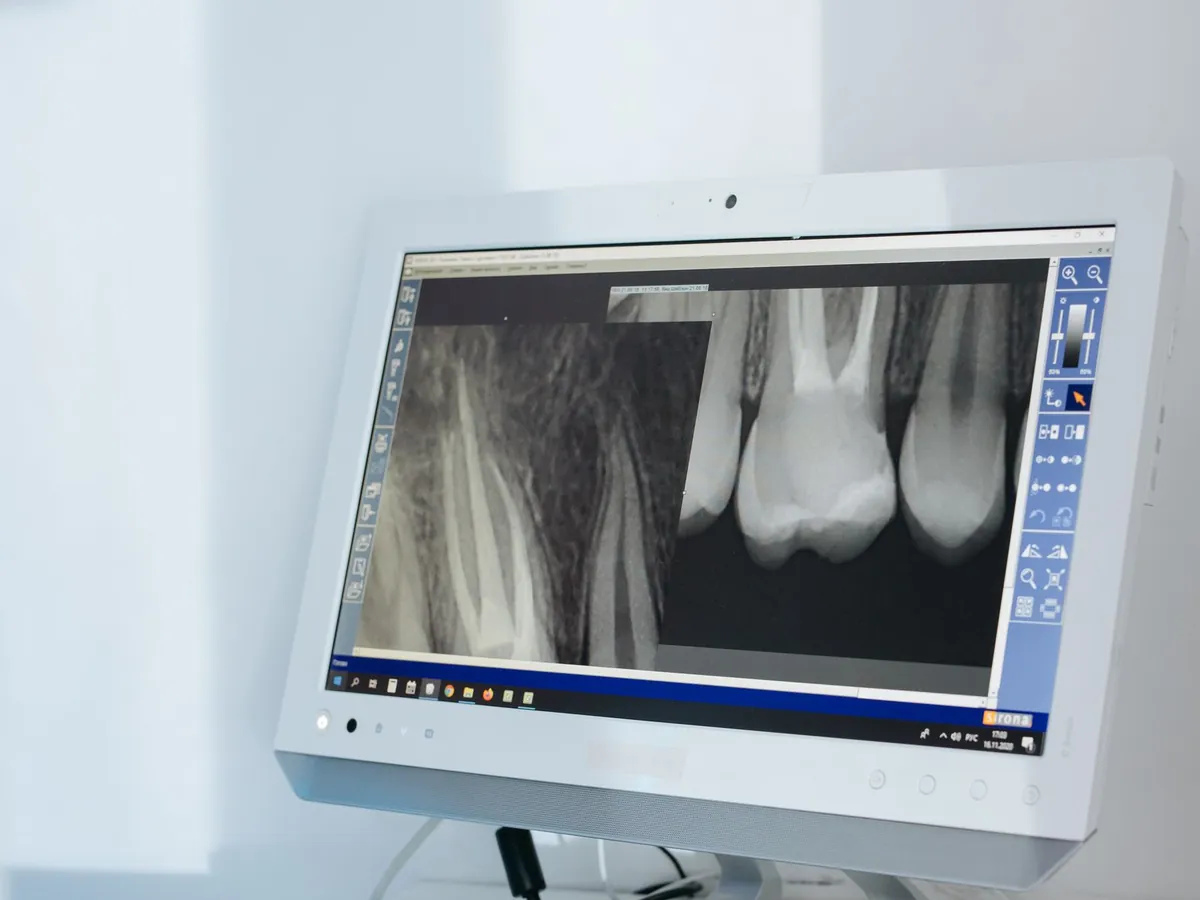
    The pockets around each tooth are measured with a fine probe, bleeding is checked and X-rays show the bone. This sets the diagnosis, stage and grade [4].

  3. Step 1

    Daily care and a professional clean

    You learn how to clean your teeth and between them, get support to stop smoking or control diabetes, and plaque and tartar above the gumline are removed [4].

  4. Step 2

    Deep cleaning

    Plaque and tartar are removed from the roots below the gumline with hand or ultrasonic instruments [4], often under local anaesthetic [3].

  5. After healing

    Re-evaluation

    The pockets are measured again to see how the gums responded [3][4].

  6. Step 3, if needed

    Gum surgery

    Only where deep pockets remain: the gum is opened to clean the roots, or the bone defect is regenerated or reshaped [4].

  7. For life

    Maintenance

    Supportive care visits every 3 to 12 months, depending on your risk [4].

The number of appointments depends on how advanced the disease is [3]; your dentist confirms the plan after examining you.

Bleeding gums? Find out what they need

Send a few photos of your gums or a recent X-ray. A dentist reviews them and replies with personalised advice and a written quote, free of charge.

Compare your options

Professional cleaning vs deep cleaning vs gum surgery

A professional clean treats gingivitis, deep cleaning is the main treatment for periodontitis, and surgery is kept for deep pockets that remain afterwards [1][4].

Professional cleaning Deep cleaning Gum surgery
Also called Scale and polish Scaling and root planing Access flap, regenerative or resective surgery
Where it works Above the gumline Below the gumline, on the roots Under the gum, opened for access
Treats Gingivitis; first step for everyone Periodontitis: pockets and lost support Pockets that do not respond to deep cleaning

EFP S3 guideline [4] and Cochrane review [5]. Surgery (step 3) is considered when pockets deeper than 4 mm that bleed, or of 6 mm or more, remain after deep cleaning [4].

Beyond your mouth

Gum disease and your general health

Periodontitis is linked with diabetes, heart and blood vessel disease and complications in pregnancy [4]. A link is not proof that gum disease causes them.

The clearest evidence concerns diabetes, a proven risk factor for periodontitis [4]. In a Cochrane review of 35 randomised trials in people with both conditions, mostly type 2 diabetes, deep cleaning lowered HbA1c, a measure of average blood sugar, by 0.43 percentage points 3 to 4 months later (moderate-certainty evidence) [5]. If you have diabetes, tell your dentist.

  • 0.43 points

    lower HbA1c 3 to 4 months after gum treatment in people with diabetes, across 35 trials [5]

Before other treatment

Why healthy gums come first

Every restoration depends on the gums and bone around it, so gum disease is treated first.

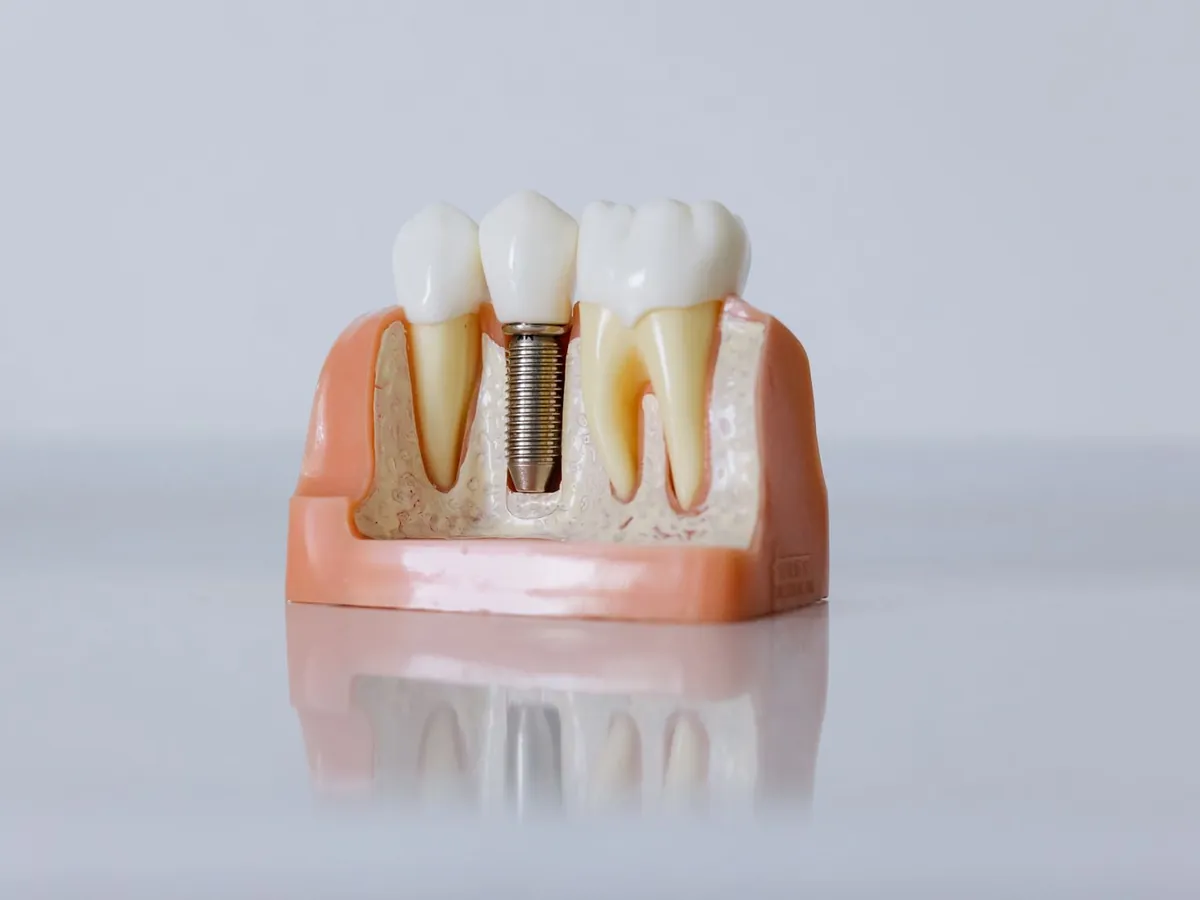
  • Dental implants: people with a history of periodontitis, poor plaque control or no regular maintenance have a higher risk of peri-implantitis, an inflammation that destroys the bone around an implant [6].
  • Veneers and crowns: their edges sit at the gum line, so the gums should be healthy and settled first. When gum treatment does not work as hoped, crowns and bridgework may not be offered [3].
  • Invisalign: your dentist will want any gum disease under control before teeth are moved.

Once your gums are healthy, their shape can be considered too: gum contouring for a gummy smile or an uneven gum line is covered under gingival esthetics.

Before you decide

Side effects and aftercare

In studies of deep cleaning, harms were rare when they were reported [4]. Know these points:

  • SensitivityTeeth can be more sensitive to hot and cold afterwards, usually for a short time [3].
  • Gum shrinkageAs swelling settles, the gums can recede and the gaps between teeth can look larger. This is usually not reversible [3].
  • AntibioticsNot routine; they may be considered for specific patients [4].
  • LasersThe European guideline suggests not adding lasers to deep cleaning, as the evidence is insufficient [4].
  • Aftercare for lifeBrush twice a day with fluoride toothpaste, spit rather than rinse, clean between your teeth daily, do not smoke [1] and keep your maintenance visits [3][4].
Dr. Hediye Nur Uygun

From our dentist

“Gums that bleed a little when you brush are common, which is exactly why they are easy to ignore; to me it is the first sign worth checking. Before suggesting treatment, I measure around every tooth and look at the X-rays, so we both know whether the gums are only inflamed or the bone is affected. If implants, crowns or veneers are planned, the gums are settled first, because new teeth need a healthy base. After the deep cleaning, your daily routine at home carries the result.”

Dr. Hediye Nur Uygun · General Dentistry

Treatment abroad

Choosing a clinic in Istanbul for gum treatment

Periodontitis is re-evaluated after healing and needs maintenance for life [3][4], so ask before you book:

  • Who will treat my gums, and who checks them at the re-evaluation?
  • Will I get my pocket measurements, X-rays, stage and grade in writing?
  • How many appointments will I need, and how long should I stay?
  • Who re-evaluates my gums if I am already home, and will my records go to my own dentist?

This page is reviewed by Dr. Hediye Nur Uygun, a general dentist working in periodontal care. Ask us anything in a free online consultation.

Questions

Gum disease treatment: frequently asked questions

Can't find your answer? Our coordinators are happy to help on WhatsApp.

Ask on WhatsApp
Does brushing your teeth stop gum disease?

Brushing twice a day and cleaning between your teeth help prevent it [1], and gingivitis can be reversed with professional treatment and good home care [2]. Once periodontitis has formed pockets, plaque and tartar below the gumline have to be removed professionally [4][5].

How do you get rid of a gum infection?

See a dentist. Treatment ranges from a professional clean to deep cleaning, gum surgery or removing teeth that cannot be saved; antibiotics are sometimes added [1], but not routinely [4]. Ask for an urgent appointment if your gums are very sore and swollen [1].

How can I treat my receding gums at home?

At home you can help stop the recession getting worse: clean your teeth and between them every day and do not smoke [1]. Receded gum does not usually grow back by itself [3], so have a dentist find the cause and treat any gum disease first.

How can I get my gums to heal?

Clean daily, stop smoking, keep diabetes under control and have the treatment your dentist recommends [1][4], then keep your maintenance visits [4].

When is it too late to reverse gum disease?

Gingivitis can be reversed [2]. Bone lost to periodontitis does not usually come back by itself, but the disease can usually be treated and kept stable; untreated, it can lead to tooth loss [4]. See a dentist whatever the stage.

How much does gum treatment cost in Istanbul?

It depends on what you need: a professional clean, deep cleaning or surgery. After a free online assessment you receive a written quote before you travel.

What our patients say

Read what our patients say about us on Google and Trustpilot.

Patient reviews from Google and Trustpilot

Rated 5 out of 5 Trustpilot — Trustpilot review

I visited Vita Smile Dental Clinic for implants and a smile makeover, and I couldn’t be happier with the outcome. Dr. Vildan and her team were warm, knowledgeable, and extremely detail-oriented. The clinic itself is spotless and modern, and they made sure I was comfortable every step of the way. They even helped with transportation and accommodation, which made the whole experience stress-free. My new smile looks amazing — I feel more confident than ever. If you're thinking about dental treatment in Turkey, Vita Smile is a fantastic choice. Thank you for everything!

Fuat D. August 2025
Rated 5 out of 5 Google — Google review

First of all, the dentist is very reliable and professional. The clinic has a very friendly atmosphere, and both the service and approach to patients are of the highest standard – everything is handled professionally. The dentist is extremely professional and gentle in her work. She always asks if anything hurts and makes sure the patient feels comfortable during every visit. Special recognition also goes to the consultant Rafia, who always responds quickly to any questions or concerns. She is very helpful, kind, and always tries to find a solution and speak with patients with care and understanding. The clinic is very clean, and every patient is treated individually and with full attention. I wholeheartedly recommend this dental clinic.

Elwira K.
Rated 5 out of 5 Trustpilot — Trustpilot review

We were in a medical trip to Turkey, headed to Vita Smile. Everything went smooth -from airport to clinic and back home-. The procedure was seamless, as for me I regained trusts in myself now that I can smile again. Also lots of thanks to ms.Oana for everything.

Stephen Romania · April 2025
Rated 5 out of 5 Google — Google review

The team and doctors are very professional, I am very pleased to have had my teeth whitened and cleaned, I recommend it to everyone. Thank you

Rumeysa Y.
Rated 5 out of 5 Trustpilot — Trustpilot review

I visited Vita smile for my tooth pain. Dr Vildan and all team was so helpfull. They gave me teeth cleaning for free as a present. I suggest it to all my friends. Thanks for all.

Mehmet F. August 2025
Rated 5 out of 5 Trustpilot — Trustpilot review

Diş için geldim. Diş ile ilgili bütün sorunlarimi hallettiler ve çok güzel oldu çok ilgililer.

Oğuzhan F. August 2025
Rated 5 out of 5 Trustpilot — Trustpilot review

yeni zirkonyum yaptırdım çok memnun kaldım, hekimin eli çok hafifti gerçekten. gülümsemek 🤩

June 2025
Rated 5 out of 5 Trustpilot — Trustpilot review

Temiz ve rahat bir ortamda operasyon um yapildi.Doktorlara ilgilerinden dolayı teşekkür ederim. Yapılan işlemler beni çok mutlu ve özgüvenli hissettirdi. Tüm ekibe TESEKKUR ederim.

Ulas K. March 2025
Rated 5 out of 5 Trustpilot — Trustpilot review

Almanya'daki bir tanıdığımız vaasitasi ile alakalı geldim 1 hafta içerisinde full ağız implant ve lamine tedavilerini yaptirdim doktor ekip tamamı ile kusursuz kesinlikle tavsiye ediyorum

Volkan S. March 2025
Rated 5 out of 5 Google — Google review

Daha önce olan diş kaplamalarım inanınlmaz rahatsız ediyordu zirkonyum kaplama için arkadaşımın tavsiyesiyle gittim 3-4 gün gibi bir sürede eski kaplamalar sökülüp yeni ölçüler alındı provalar yapıldı ve yeni kaplamalar yapıldı çok doğal ve çok kullanımı rahat hiçbir sıkıntı yaşamadım tüm ekibe teşekür ederim.

Mine A.
Rated 5 out of 5 Google — Google review

"Gülüşümü tamamen değiştirdiler! Zirkonyum kaplamalarım o kadar doğal duruyor ki, kimse kaplama olduğunu anlamıyor. Renk uyumu ve diş etleriyle olan uyumu tek kelimeyle mükemmel. Estetik kaygısı olan herkese gözü kapalı öneririm."

Ali A.
All patient reviews

Free consultation

Free initial consultation

Leave your details and a treatment coordinator will contact you to arrange your free online consultation.

  1. We get in touchWe reply to you on WhatsApp.
  2. You share photos or an X-rayA dentist reviews them before your consultation.
  3. You receive your plan & quoteItemised and free, with no obligation to book.

Your request opens in WhatsApp — our coordinator replies there.

  • Secure & confidential
  • KVKK & GDPR
  • Free, no obligation