
Implant dentistry

Full Mouth Dental Implants

Full mouth dental implants replace all the teeth in one or both jaws with new teeth held by implants in the jawbone. The teeth can be a fixed bridge on four to six implants per jaw, such as All-on-4 or All-on-6, or a denture that clips onto implants. The choice depends on your bone, bite, health and budget.

Published by Vita Smile Dental Clinic Sources (6)

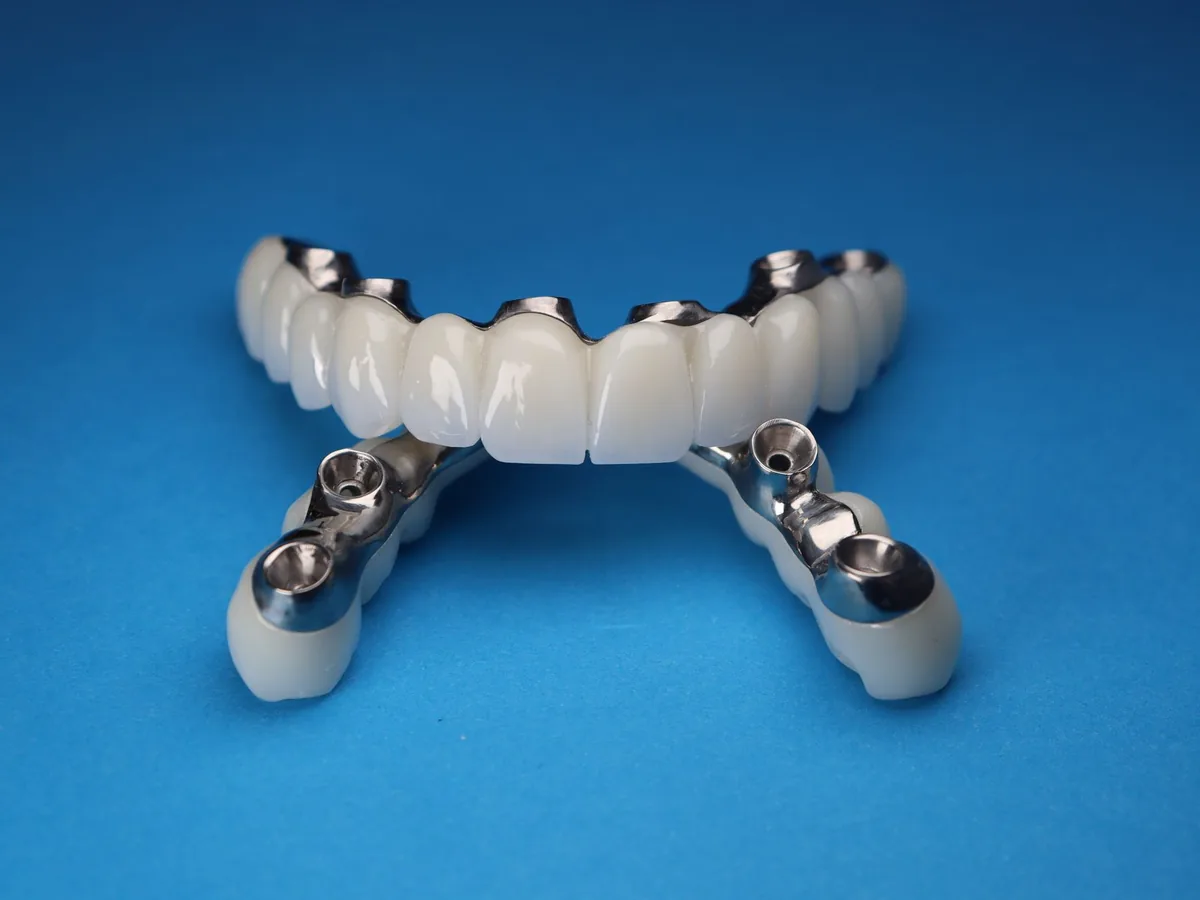
A full-arch implant bridge with its titanium connectors on a blue background

Key takeaways

  • Full mouth implants hold either a fixed bridge that only your dentist can remove or an overdenture that clips on and comes out for cleaning [1].
  • A review of 93 studies found similar implant and bridge survival with fewer than five implants per jaw as with five or more [4].
  • In randomised trials, lower dentures held by implants were rated more satisfactory than conventional dentures, although the size of the benefit is uncertain [5].
  • Fixed full-arch bridges need repairs over time: an estimated 8.6% had no complication at all after 10 years [6].
  • Daily cleaning and regular check-ups keep implants healthy [2]; smoking raises the risk of problems [1].

At a glance

Replaces
All teeth in one or both jaws
Options
Fixed bridge or clip-on overdenture
Fixed bridge
Commonly 4–6 implants per jaw
Planning
3D scan (cone beam CT)
Anaesthesia
Usually local
Bone healing
Usually 2–6 months
Visits
Several, in stages over a few months
Implant systems at Vita Smile
Ires, Medigma

Clinically reviewed by

Dr. Saffet Ekinci

Oral and Maxillofacial Surgeon · Implant & Surgical Dentistry Specialist

Last reviewed
Sources 6 sources cited

The basics

What are full mouth dental implants?

Full mouth dental implants are a plan, not a single product. Implants in the jawbone hold a full set of new teeth [2], in one jaw or both. There are three main ways to do it:

  • A fixed full-arch bridge on four to six implants: one piece with a full row of teeth that only your dentist can remove. All-on-4 uses four implants, the back two tilted; All-on-6 spreads the bridge over six.
  • Fixed bridges in sections: with enough bone for more implants, the arch can be made as several shorter bridges, screwed or cemented to the implants [1].
  • An implant-retained overdenture: a full denture held firmly by press-stud-like attachments, which you can take out when needed [1].

If your teeth are worn but the roots are healthy, full-mouth zirconia crowns may save them. If only some teeth are missing, single dental implants keep the healthy ones.

  • Similar

    implant and bridge survival with fewer than five or with five or more implants per jaw, across 93 studies [4]

Is it right for you?

Who are full mouth implants for?

Full mouth implants suit adults who have lost, or are about to lose, all the teeth in one or both jaws and want teeth that stay in place. You need enough jawbone, or bone that can be built up, and healthy gums; smoking and some health conditions raise the risk of problems [1].

Full mouth implants may suit you if

  • You have no teeth left in one or both jaws
  • Your remaining teeth are failing and cannot be saved
  • Your full denture has become loose as your gums and jawbone have shrunk [3]
  • You will clean around the implants every day and keep your check-ups [2]
  • You do not smoke, or are willing to stop [1]

Ask us about alternatives if

  • Some healthy teeth can still be saved: implants for the gaps may be enough
  • You have had radiotherapy to the jaws, have poorly controlled diabetes or take bisphosphonates: the risk of complications is higher [1]
  • You find detailed cleaning around implants hard: an overdenture that comes out may be easier to keep clean

Planning

One jaw or both, fixed or removable: how the option is chosen

There is no single right number of implants. Your surgeon plans from your scans and from how you want to live with your new teeth:

  • BoneHow much there is, and where, usually seen on a 3D scan (cone beam CT) [1]. Missing bone can be grafted, and in the upper jaw a sinus graft can add height [1]; tilted implants, as in All-on-4, use the bone that is there.
  • Sinuses and nervesImplants are planned around the sinuses in the upper jaw and the nerve that gives feeling to the lip and chin in the lower jaw.
  • Your biteThe opposite jaw and any tooth grinding affect how much support the new teeth need.
  • Fixed or removableA fixed bridge stays in place like natural teeth; an overdenture comes out [1], which makes cleaning simpler.
  • HygieneImplants need careful daily cleaning with interdental brushes [2].
  • BudgetThe number of implants, any grafts and the material of the final teeth all affect the cost.

Both jaws can be treated together or one after the other, and some people need only one: the other may keep natural teeth, crowns or single implants. A review of 93 studies found similar survival with fewer or more implants per jaw [4], so the number follows your anatomy, not a package.

Step by step

How full mouth implant treatment works

Treatment has a surgical stage and a restorative stage, with healing in between: in most cases implants are left to bond with the bone for 2–6 months before use [1].

  1. Before you travel

    Online consultation

    Send a recent X-ray or photos of your teeth. A dentist replies with a personalised plan and a written quote, confirmed after the examination.

  2. Assessment

    Examination and 3D scan

    Your mouth, gums and bite are examined, with X-rays and usually a cone beam CT scan [1]. The option and implant positions for each jaw are planned from them.

  3. If needed

    Extractions and bone grafting

    Teeth that cannot be saved are removed. Small bone defects can be grafted as the implants are placed; larger ones may need a block of bone [1].

  4. Surgery

    Implants and temporary teeth

    The implants are placed, usually under local anaesthesia [1]. Depending on how firm they are, you leave with a temporary fixed bridge or a temporary denture.

  5. Healing, usually 2–6 months

    The implants bond with the bone

    Swelling and bruising are usually worst 24–48 hours after surgery and are managed with painkillers [1].

  6. Final stage

    Final bridge or overdenture

    New scans are taken, fit and bite are checked with you, and the final teeth are fixed or clipped onto the implants.

  7. At home

    Cleaning and check-ups

    Clean around the implants every day and keep regular dental and hygiene appointments [2].

Timelines vary with your bone, grafts and whether one or both jaws are treated; your surgeon confirms them after examining you.

Find out which full mouth option suits you

Send a recent X-ray or a few photos of your teeth. A dentist reviews them and replies with a personalised plan and a written quote, free of charge, confirmed after the examination.

Compare your options

Fixed bridge on 4 or 6 implants vs overdenture vs complete denture

Fixed bridges on fewer than five and on five or more implants have shown similar survival [4]. An overdenture clips onto implants and comes out [1]; in lower-jaw trials it was rated more satisfactory than a conventional denture [5], which can loosen over time [3].

Fixed bridge on 4 implants Fixed bridge on 6 implants Implant overdenture Complete denture
Can you take it out? No, only your dentist No, only your dentist Yes, when needed Yes, every night
Implants per jaw 4 6 Depends on the jaw and the plan None
Bone needed Designed for jaws with less bone Enough bone for six implants Depends on the plan No implant surgery
What research shows Similar survival to five or more implants Similar survival to fewer implants Rated above a conventional lower denture Can loosen as gums and bone shrink
Daily care Clean around and under the bridge Clean around and under the bridge Take out, clean, clean the attachments Take out, clean, leave out at night
Parts that wear Bridge material and screws Bridge material and screws Clips and attachments Denture teeth and fit

Survival: review of 93 studies, fewer than five vs five or more implants per jaw [4]. Satisfaction: meta-analysis of randomised trials, lower overdentures vs conventional dentures [5]. Overdentures: [1]. Dentures: NHS [3]. Bridge wear: [6].

Before you decide

Risks, upkeep and life with full-arch implants

Full-arch implants give you teeth that stay in place, but they mean surgery and lifelong maintenance. Weigh these points honestly:

  • Implant not bondingIn some cases an implant never knits to the bone (early failure) [1].
  • Inflammation around implants (peri-implantitis): signs include red, sore or swollen gums, bleeding and infection; in time an implant can loosen or be lost [1][2].
  • Higher-risk groupsSmoking, poor oral hygiene, past gum disease, radiotherapy to the jaws, poorly controlled diabetes and medicines such as bisphosphonates raise the risk of complications [1].
  • Repairs over timeOn fixed full-arch bridges, chipping of the tooth material and broken screws were the most common technical problems, and an estimated 8.6% of bridges had no complication at all after 10 years [6]. That need not mean the implants have failed, but it does mean repair time and cost [6].
  • Sinuses and nervesImplants are planned around them on a 3D scan [1].
  • Hard to undoRemoved teeth cannot be put back, so make sure every alternative has been explained first.

Life with full-arch implants is mostly routine: clean around the implants every day with interdental brushes and keep regular dental and hygiene appointments [2]. With an overdenture, you also take the denture out to clean it and the attachments. Implants are not guaranteed for life, but with good care they can last a long time [2].

Dr. Saffet Ekinci

From our surgeon

“Replacing every tooth starts with a conversation about daily life: some people want teeth that stay in, others prefer a denture they can lift out and clean. Then I check whether the bone, the sinuses and the nerves allow that wish, and whether both jaws need treatment now or one can wait. A plan that looks perfect on the scan but is hard to keep clean is not a good plan, so I would rather show you two workable options than promise one.”

Dr. Saffet Ekinci · Oral and Maxillofacial Surgeon · Implant & Surgical Dentistry Specialist

Treatment abroad

Choosing a clinic in Turkey for full mouth implants

Full mouth implants mean surgery, months of healing [1] and a second stage for the final teeth, so plan for all of it, not only the operation. Before you book, ask:

  • Who will place my implants, and who will make and fit the final teeth?
  • Is a 3D scan (cone beam CT) part of the planning [1]?
  • Why this option and this number of implants for each jaw?
  • Which implant system is used, and can a dentist where I live get parts for it?
  • How many trips will I need, and what will I wear between surgery and the final teeth?
  • What happens if an implant fails or the bridge chips, and what aftercare is included once I am home?

What we can answer now: implant treatment at Vita Smile is planned by our oral and maxillofacial surgeon, Dr. Saffet Ekinci, who reviews our implant pages, and we use the Ires and Medigma implant systems. Everything else depends on your scan; your written plan answers it after a free online consultation.

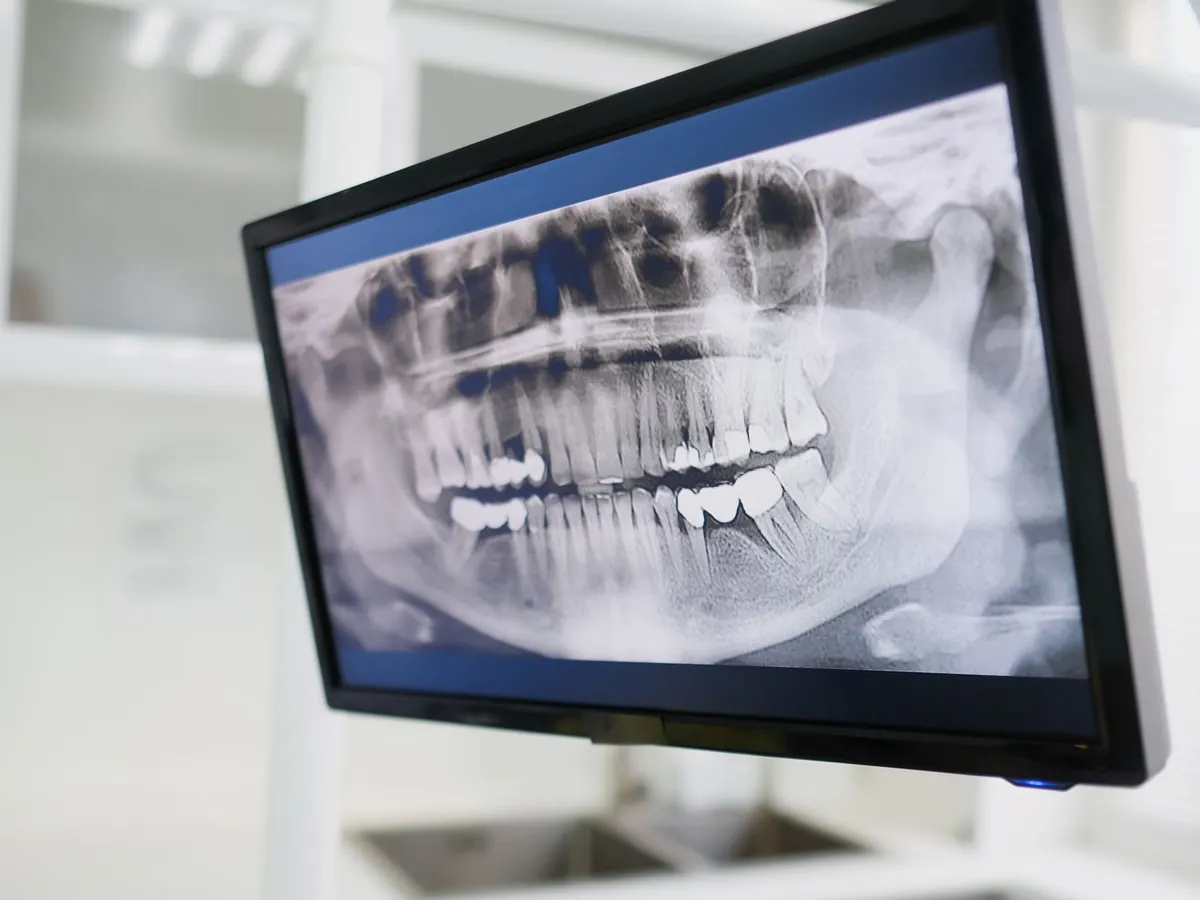
A panoramic dental X-ray on a monitor

Questions

Full mouth dental implants: frequently asked questions

Can't find your answer? Our coordinators are happy to help on WhatsApp.

Ask on WhatsApp
How much does it cost to get full mouth dental implants in Turkey?

It depends on whether one or both jaws are treated, whether you choose a fixed bridge or an overdenture, the number of implants, the implant system, the material of the final teeth and any grafts. After a free online assessment you receive a personalised, itemised quote, confirmed after the examination. See full-arch implant prices and packages.

How much does an All-on-4 dental implant cost in Turkey?

All-on-4 is one of the full mouth options, so the same factors apply: one jaw or both, the implant system and the bridge material. Our All-on-4 page explains the treatment; the quote is confirmed after the examination.

Is it worth getting dental implants in Turkey?

It depends less on the country than on the planning: a licensed clinic, a scan before surgery [1] and a clear answer to who looks after your implants at home. Implants need daily cleaning and check-ups [2], and fixed bridges need repairs over the years [6], so aftercare matters as much as price.

Which hospital in Turkey is best for dental implants?

No clinic is best for everyone. Look for a licence from the Turkish Ministry of Health, a named surgeon, a 3D scan before surgery [1], a written plan and clear aftercare once you are home. The checklist above lists the questions to ask.

How long do you have to stay in Turkey for dental implants?

There are two stages: surgery with temporary teeth, then the final teeth once the implants have bonded with the bone, usually after 2–6 months [1]. Plan for at least two trips; your written plan states how long each stay is.

Can you get implants for your whole mouth?

Yes, if your bone, gums and general health allow it, in one jaw or both. Missing bone can often be grafted [1]; your surgeon confirms what is possible after a 3D scan.

What our patients say

Read what our patients say about us on Google and Trustpilot.

Patient reviews from Google and Trustpilot

Rated 5 out of 5 Trustpilot — Trustpilot review

I visited Vita Smile Dental Clinic for implants and a smile makeover, and I couldn’t be happier with the outcome. Dr. Vildan and her team were warm, knowledgeable, and extremely detail-oriented. The clinic itself is spotless and modern, and they made sure I was comfortable every step of the way. They even helped with transportation and accommodation, which made the whole experience stress-free. My new smile looks amazing — I feel more confident than ever. If you're thinking about dental treatment in Turkey, Vita Smile is a fantastic choice. Thank you for everything!

Fuat D. August 2025
Rated 5 out of 5 Google — Google review

First of all, the dentist is very reliable and professional. The clinic has a very friendly atmosphere, and both the service and approach to patients are of the highest standard – everything is handled professionally. The dentist is extremely professional and gentle in her work. She always asks if anything hurts and makes sure the patient feels comfortable during every visit. Special recognition also goes to the consultant Rafia, who always responds quickly to any questions or concerns. She is very helpful, kind, and always tries to find a solution and speak with patients with care and understanding. The clinic is very clean, and every patient is treated individually and with full attention. I wholeheartedly recommend this dental clinic.

Elwira K.
Rated 5 out of 5 Trustpilot — Trustpilot review

We were in a medical trip to Turkey, headed to Vita Smile. Everything went smooth -from airport to clinic and back home-. The procedure was seamless, as for me I regained trusts in myself now that I can smile again. Also lots of thanks to ms.Oana for everything.

Stephen Romania · April 2025
Rated 5 out of 5 Google — Google review

The team and doctors are very professional, I am very pleased to have had my teeth whitened and cleaned, I recommend it to everyone. Thank you

Rumeysa Y.
Rated 5 out of 5 Trustpilot — Trustpilot review

I visited Vita smile for my tooth pain. Dr Vildan and all team was so helpfull. They gave me teeth cleaning for free as a present. I suggest it to all my friends. Thanks for all.

Mehmet F. August 2025
Rated 5 out of 5 Trustpilot — Trustpilot review

Diş için geldim. Diş ile ilgili bütün sorunlarimi hallettiler ve çok güzel oldu çok ilgililer.

Oğuzhan F. August 2025
Rated 5 out of 5 Trustpilot — Trustpilot review

yeni zirkonyum yaptırdım çok memnun kaldım, hekimin eli çok hafifti gerçekten. gülümsemek 🤩

June 2025
Rated 5 out of 5 Trustpilot — Trustpilot review

Temiz ve rahat bir ortamda operasyon um yapildi.Doktorlara ilgilerinden dolayı teşekkür ederim. Yapılan işlemler beni çok mutlu ve özgüvenli hissettirdi. Tüm ekibe TESEKKUR ederim.

Ulas K. March 2025
Rated 5 out of 5 Trustpilot — Trustpilot review

Almanya'daki bir tanıdığımız vaasitasi ile alakalı geldim 1 hafta içerisinde full ağız implant ve lamine tedavilerini yaptirdim doktor ekip tamamı ile kusursuz kesinlikle tavsiye ediyorum

Volkan S. March 2025
Rated 5 out of 5 Google — Google review

Daha önce olan diş kaplamalarım inanınlmaz rahatsız ediyordu zirkonyum kaplama için arkadaşımın tavsiyesiyle gittim 3-4 gün gibi bir sürede eski kaplamalar sökülüp yeni ölçüler alındı provalar yapıldı ve yeni kaplamalar yapıldı çok doğal ve çok kullanımı rahat hiçbir sıkıntı yaşamadım tüm ekibe teşekür ederim.

Mine A.
Rated 5 out of 5 Google — Google review

"Gülüşümü tamamen değiştirdiler! Zirkonyum kaplamalarım o kadar doğal duruyor ki, kimse kaplama olduğunu anlamıyor. Renk uyumu ve diş etleriyle olan uyumu tek kelimeyle mükemmel. Estetik kaygısı olan herkese gözü kapalı öneririm."

Ali A.
All patient reviews

Free consultation

Free initial consultation

Leave your details and a treatment coordinator will contact you to arrange your free online consultation.

  1. We get in touchWe reply to you on WhatsApp.
  2. You share photos or an X-rayA dentist reviews them before your consultation.
  3. You receive your plan & quoteItemised and free, with no obligation to book.

Your request opens in WhatsApp — our coordinator replies there.

  • Secure & confidential
  • KVKK & GDPR
  • Free, no obligation