
Restorative dentistry

Full Mouth Porcelain Crowns

Full mouth porcelain crowns are a treatment plan that covers most or all of your teeth with tooth-coloured crowns: lithium disilicate (e-max), porcelain layered on zirconia, or porcelain fused to metal. The plan is meant for teeth that are badly worn, broken or heavily restored, not for healthy teeth, and it starts with planning your bite.

Published by Vita Smile Dental Clinic Sources (6)

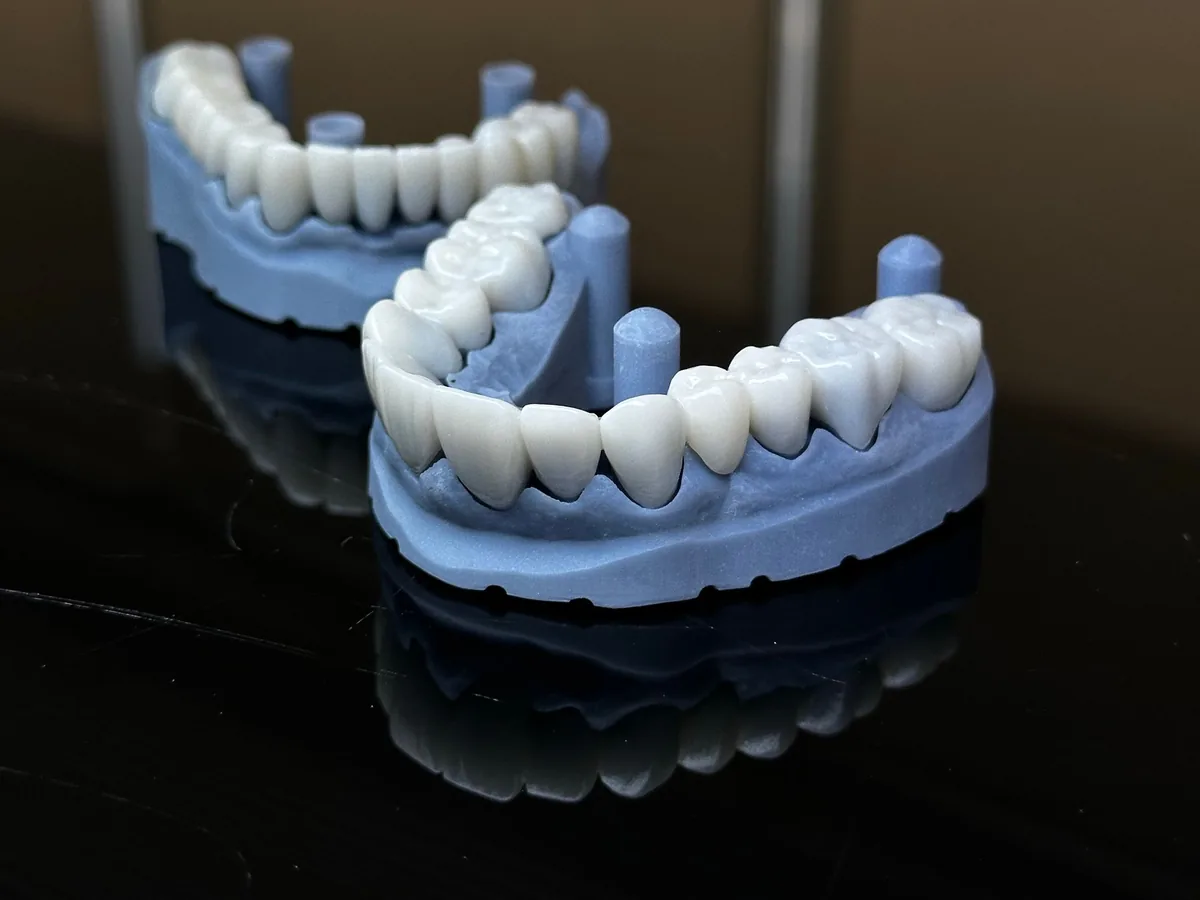
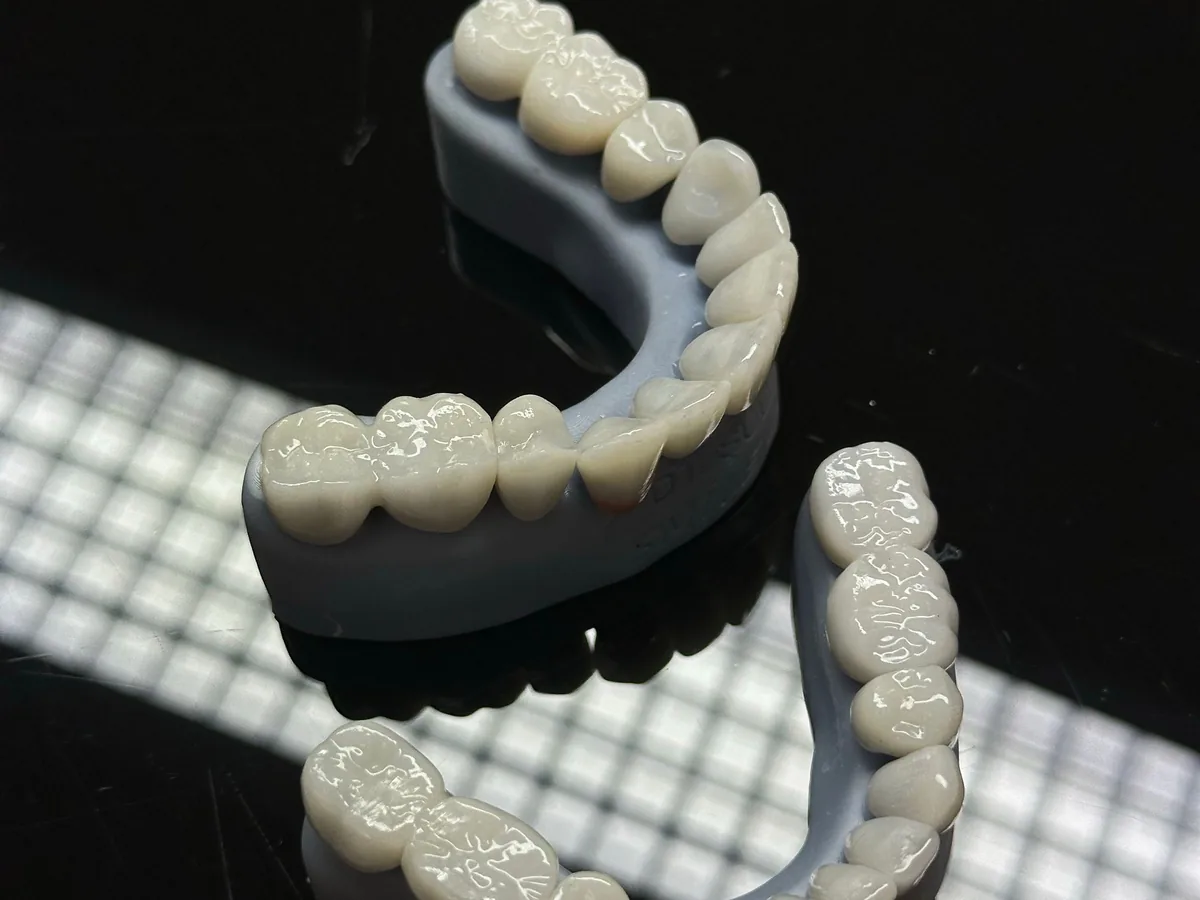
Three full-arch dental models on a reflective surface

Key takeaways

  • "Porcelain" covers several materials: all-porcelain and ceramic crowns, porcelain fused to metal, and porcelain layered on zirconia [1][2].
  • In a 2026 review of 64 studies, 98.5% of monolithic lithium disilicate crowns were still in place at five years, against 90.4% of feldspathic porcelain crowns [2].
  • In a laboratory study, crown preparations removed about 67.5% to 75.6% of a back tooth, so crowning healthy teeth is hard to justify [3].
  • For worn teeth, European experts advise delaying restorations as long as possible, then choosing the least invasive approach [4].
  • Lithium disilicate is about 30% more translucent than conventional zirconia; zirconia is stronger [5].

At a glance

What it is
Crowns on most or all teeth
"Porcelain" can mean
Glass-ceramic, layered or metal-ceramic
Tooth preparation
Shaped for each crown; not reversible
Monolithic e-max at 5 years
98.5% of single crowns in place
Planned around
Your bite and the teeth that show
Visits
At least 2; laboratory 1–2 weeks

Clinically reviewed by

Dr. Vildan Aktamış

Prosthodontics & Aesthetic Dentistry · Restorative Dental Care

Last reviewed
Sources 6 sources cited

The basics

What are full mouth porcelain crowns?

A crown is a custom-made cover that fits over the remaining part of a tooth and restores its shape, strength and appearance [1]. Our dental crowns page explains when a single tooth needs one. When most of your teeth are crowned, the crowns also decide how your teeth meet, so the whole mouth is planned as one piece of work.

"Porcelain" is a loose word. In clinic adverts it can mean:

  • Glass-ceramic, such as lithium disilicate (IPS e.max): translucent, made in one piece (monolithic) or with a porcelain layer [5]. The same material is used for E-max veneers.
  • Feldspathic porcelainThe traditional dental ceramic. As a whole crown it had the lowest five-year survival in a 2026 review [2].
  • Porcelain layered on zirconiaA strong zirconia core covered with porcelain [5].
  • Porcelain fused (or bonded) to metalA strong metal base covered with tooth-coloured porcelain, one of the most common types [1].

Monolithic zirconia, with no porcelain layer, has its own page: full mouth zirconia crowns. A plan can also mix materials, more translucent where teeth show and stronger where chewing forces are highest [5]. Ask the clinic to name the material for each tooth in writing.

Is it right for you?

When is a full mouth of crowns justified?

A full-mouth crown plan suits adults whose teeth are badly worn, broken or heavily restored across much of the mouth, so most teeth need full coverage anyway [1]. It is not a cosmetic shortcut for healthy teeth: for worn teeth, European experts recommend delaying restorations and starting with a minimally invasive approach [4].

A full-mouth plan may suit you if

  • Many of your teeth are badly worn, broken or cracked [1]
  • Many teeth have large fillings or root canal treatment and need protecting [1]
  • Your bite has lost height through wear and has to be rebuilt
  • Your gums are healthy, or gum disease has been treated first

Ask us about alternatives if

  • Your teeth are healthy and you want a different colour or shape: whitening, veneers or composite bonding keep more tooth
  • Only a few teeth are damaged: the rest can be restored more conservatively [4]
  • Several teeth are missing: see full mouth dental implants
  • You grind or clench: tell your dentist; it changes the material and may mean a night guard
  • You have active decay or gum disease: it is treated before any crown is made

Step by step

How a full-mouth crown plan works

Each crown follows the usual steps: shaping, a scan or impression, a temporary crown, then the finished crown from the laboratory [1]. With a whole mouth, the bite is planned first.

  1. Before you travel

    Online consultation

    Send photos and any recent X-rays. A dentist replies with a provisional plan; the written quote is confirmed after the examination.

  2. First visit

    Examination, tooth by tooth

    Teeth, gums and bite are checked with X-rays. Each tooth is assessed on its own: does it need a crown, or would a filling, onlay or veneer keep more of it [4]?

  3. Planning

    Bite and smile design

    If wear has shortened your teeth, your bite may need raising. A systematic review found a permanent increase, when indicated, safe and predictable, especially with fixed restorations; any symptoms were self-limiting [6].

  4. Preparation

    Shaping, scans and temporaries

    The teeth are shaped, scanned or recorded with impressions, and protected with temporary crowns [1], in which the planned shape and bite can be checked.

  5. Fitting

    Try-in and cementing

    Each crown is checked for fit, comfort and shade, the bite is balanced, and the crowns are cemented permanently [1].

  6. At home

    Aftercare

    Brush twice a day with fluoride toothpaste, clean between your teeth daily, avoid biting hard objects and keep your check-ups [1].

The number of visits and the time between them depend on your plan; your dentist confirms them after examining you.

Find out how many teeth really need crowns

Send a few photos and any recent X-rays. A dentist replies with a personalised plan, free of charge; the written quote is confirmed after the examination.

Compare your options

Porcelain options vs monolithic zirconia for a full-mouth plan

All four reached five-year survival above 95% in a 2026 review of single crowns, and monolithic designs had significantly fewer chips and fractures than layered ones [2]. The real trade-off is looks against strength: lithium disilicate is more translucent, zirconia is stronger [5].

Lithium disilicate (e-max) Porcelain layered on zirconia Porcelain fused to metal Monolithic zirconia
What it is Glass-ceramic, monolithic or layered Zirconia core covered with porcelain Metal base covered with porcelain One solid piece of zirconia
Metal-free Yes Yes No Yes
Appearance Translucent and lifelike Lifelike porcelain surface Natural-looking porcelain over metal More opaque
Flexural strength 370–460 MPa (pressed) Strong core, weaker porcelain layer Strong metal base 500–1,200 MPa
Porcelain layer that can chip Only if layered Yes Yes No
Survival at 5 years 98.5% monolithic, 95.7% layered 97.3% 97.1% 96.8%

Survival and chipping: a 2026 review of 64 studies of single crowns, not full-mouth plans [2]. Strength and translucency: [5]; porcelain fused to metal: [1]. Zirconia in depth: zirconium crowns.

Before you decide

Risks and downsides of full mouth porcelain crowns

A full mouth of crowns multiplies every trade-off by the number of teeth. Weigh these points honestly:

  • Not reversibleIn a laboratory study on model premolars and molars, crown preparations removed about 67.5% to 75.6% of the tooth, the most for a metal-ceramic design, against 5.5% to 27.2% for adhesive and inlay designs [3].
  • Over-treatmentCrowning teeth that need little or no treatment removes healthy tooth for good; experts recommend a minimally invasive approach for worn teeth [4].
  • ChippingA porcelain layer can chip; monolithic crowns had significantly fewer chips and fractures [2].
  • Weaker traditional porcelainFeldspathic crowns had significantly lower five-year survival, 90.4%, and performed differently on front and back teeth [2].
  • Bite changesA raised bite takes getting used to; symptoms in the review were self-limiting [6].
  • Wear on opposing teethOn lithium disilicate, glaze and porcelain layering increase wear; a polished surface is gentler [5].
  • The teeth underneathIn one long-term study of lithium disilicate crowns, the main complications were crowns coming loose, decay at the edges and sensitivity [5].

Crowns can last many years with good care, and your dentist can tell you how long yours are likely to last [1].

Dr. Vildan Aktamış

From our dentist

“Porcelain can mean several materials, and in a full mouth I choose tooth by tooth rather than once for every tooth. Where your teeth show when you smile, I look for a ceramic that lets light pass through; where you chew hardest, strength comes first, even if that means a different material. Every crown is tried in your mouth before it is cemented, because shade and shape are easier to judge on your face than on a model.”

Dr. Vildan Aktamış · Prosthodontics & Aesthetic Dentistry · Restorative Dental Care

Treatment abroad

Choosing a clinic in Turkey for full mouth porcelain crowns

Crowning most of your teeth changes your bite as well as your smile, so how the bite is planned is part of the answer you need. Before you book, ask:

  • Why does each tooth need a crown, and could any keep a filling, onlay or veneer instead?
  • Which material is planned for each tooth, and is it named in my written quote?
  • Will my bite be changed, and how will it be tested before the final crowns?
  • Which laboratory makes the crowns?
  • What aftercare is included, and what happens if a crown chips or comes loose at home?

At Vita Smile, the materials planned for your case are named in your written quote, and full mouth plans are made by Dr. Vildan Aktamış, a general dentist who focuses on prosthodontics and who also reviewed this page.

Questions

Full mouth porcelain crowns: frequently asked questions

Can't find your answer? Our coordinators are happy to help on WhatsApp.

Ask on WhatsApp
How much do full mouth crowns cost in Turkey?

It depends on how many teeth really need crowns, the material for each and any treatment needed first. A free online assessment gives you a provisional plan; the written quote is confirmed after the examination. See crown prices and packages.

Is it worth getting porcelain crowns in Turkey?

Turkey can be worth it when the plan is conservative: a licensed clinic, an examination before any tooth is shaped and a clear reason for every crown. Be wary of plans that crown healthy teeth: preparation removes much of a tooth [3] and cannot be undone.

How long do Turkey teeth crowns last?

Crowns can last many years if well cared for [1]. Research mostly reports five-year results: in a 2026 review, 96.8% to 98.5% of monolithic zirconia, metal-ceramic and monolithic lithium disilicate crowns were still in place [2].

How long do you have to stay in Turkey for porcelain crowns?

In most cases a crown takes two visits: one to shape the tooth and one to fit the finished crown [1]. With a whole mouth, your stay depends on the number of teeth and any treatment needed first; your written plan states it after the examination.

Are porcelain or zirconia crowns better?

Neither is better for every tooth. Lithium disilicate is more translucent, which suits teeth that show; zirconia is stronger, which suits back teeth [5]. Both reached five-year survival comparable to metal-ceramic crowns [2]. See full mouth zirconia crowns.

What are the disadvantages of porcelain crowns?

Each tooth has to be shaped [1][3]. A porcelain layer can chip [2], feldspathic porcelain crowns had lower survival [2], and all-porcelain crowns are not as strong as some other options [1].

What our patients say

Read what our patients say about us on Google and Trustpilot.

Patient reviews from Google and Trustpilot

Rated 5 out of 5 Trustpilot — Trustpilot review

I visited Vita Smile Dental Clinic for implants and a smile makeover, and I couldn’t be happier with the outcome. Dr. Vildan and her team were warm, knowledgeable, and extremely detail-oriented. The clinic itself is spotless and modern, and they made sure I was comfortable every step of the way. They even helped with transportation and accommodation, which made the whole experience stress-free. My new smile looks amazing — I feel more confident than ever. If you're thinking about dental treatment in Turkey, Vita Smile is a fantastic choice. Thank you for everything!

Fuat D. August 2025
Rated 5 out of 5 Google — Google review

First of all, the dentist is very reliable and professional. The clinic has a very friendly atmosphere, and both the service and approach to patients are of the highest standard – everything is handled professionally. The dentist is extremely professional and gentle in her work. She always asks if anything hurts and makes sure the patient feels comfortable during every visit. Special recognition also goes to the consultant Rafia, who always responds quickly to any questions or concerns. She is very helpful, kind, and always tries to find a solution and speak with patients with care and understanding. The clinic is very clean, and every patient is treated individually and with full attention. I wholeheartedly recommend this dental clinic.

Elwira K.
Rated 5 out of 5 Trustpilot — Trustpilot review

We were in a medical trip to Turkey, headed to Vita Smile. Everything went smooth -from airport to clinic and back home-. The procedure was seamless, as for me I regained trusts in myself now that I can smile again. Also lots of thanks to ms.Oana for everything.

Stephen Romania · April 2025
Rated 5 out of 5 Google — Google review

The team and doctors are very professional, I am very pleased to have had my teeth whitened and cleaned, I recommend it to everyone. Thank you

Rumeysa Y.
Rated 5 out of 5 Trustpilot — Trustpilot review

I visited Vita smile for my tooth pain. Dr Vildan and all team was so helpfull. They gave me teeth cleaning for free as a present. I suggest it to all my friends. Thanks for all.

Mehmet F. August 2025
Rated 5 out of 5 Trustpilot — Trustpilot review

Diş için geldim. Diş ile ilgili bütün sorunlarimi hallettiler ve çok güzel oldu çok ilgililer.

Oğuzhan F. August 2025
Rated 5 out of 5 Trustpilot — Trustpilot review

yeni zirkonyum yaptırdım çok memnun kaldım, hekimin eli çok hafifti gerçekten. gülümsemek 🤩

June 2025
Rated 5 out of 5 Trustpilot — Trustpilot review

Temiz ve rahat bir ortamda operasyon um yapildi.Doktorlara ilgilerinden dolayı teşekkür ederim. Yapılan işlemler beni çok mutlu ve özgüvenli hissettirdi. Tüm ekibe TESEKKUR ederim.

Ulas K. March 2025
Rated 5 out of 5 Trustpilot — Trustpilot review

Almanya'daki bir tanıdığımız vaasitasi ile alakalı geldim 1 hafta içerisinde full ağız implant ve lamine tedavilerini yaptirdim doktor ekip tamamı ile kusursuz kesinlikle tavsiye ediyorum

Volkan S. March 2025
Rated 5 out of 5 Google — Google review

Daha önce olan diş kaplamalarım inanınlmaz rahatsız ediyordu zirkonyum kaplama için arkadaşımın tavsiyesiyle gittim 3-4 gün gibi bir sürede eski kaplamalar sökülüp yeni ölçüler alındı provalar yapıldı ve yeni kaplamalar yapıldı çok doğal ve çok kullanımı rahat hiçbir sıkıntı yaşamadım tüm ekibe teşekür ederim.

Mine A.
Rated 5 out of 5 Google — Google review

"Gülüşümü tamamen değiştirdiler! Zirkonyum kaplamalarım o kadar doğal duruyor ki, kimse kaplama olduğunu anlamıyor. Renk uyumu ve diş etleriyle olan uyumu tek kelimeyle mükemmel. Estetik kaygısı olan herkese gözü kapalı öneririm."

Ali A.
All patient reviews

Free consultation

Free initial consultation

Leave your details and a treatment coordinator will contact you to arrange your free online consultation.

  1. We get in touchWe reply to you on WhatsApp.
  2. You share photos or an X-rayA dentist reviews them before your consultation.
  3. You receive your plan & quoteItemised and free, with no obligation to book.

Your request opens in WhatsApp — our coordinator replies there.

  • Secure & confidential
  • KVKK & GDPR
  • Free, no obligation