
I visited Vita Smile Dental Clinic for implants and a smile makeover, and I couldn’t be happier with the outcome. Dr. Vildan and her team were warm, knowledgeable, and extremely detail-oriented. The clinic itself is spotless and modern, and they made sure I was comfortable every step of the way. They even helped with transportation and accommodation, which made the whole experience stress-free. My new smile looks amazing — I feel more confident than ever. If you're thinking about dental treatment in Turkey, Vita Smile is a fantastic choice. Thank you for everything!
Cosmetic dentistry
Composite Bonding
Composite bonding is a cosmetic treatment in which a dentist adds tooth-coloured composite resin to your teeth, shapes it by hand and hardens it with a light. It repairs chips, closes small gaps, evens out worn or uneven edges and changes the shape of teeth, usually with little or no enamel removed, and is often done in one visit.
Published by Vita Smile Dental Clinic Sources (6)
Key takeaways
- Composite bonding adds tooth-coloured resin to your teeth to repair chips, close small gaps and reshape edges, usually with little or no enamel removed [1][2].
- It can often be done in one visit and takes about 30 to 60 minutes per tooth [1].
- Composite is more porous than enamel: it can stain, lose its shine and chip, so it needs polishing, repair or replacement over time [2].
- In a review of 17 studies of front-tooth composite restorations, annual failure rates ranged from 0 to 4.1%; fracture was the most common cause [3].
- Bonding may not suit you if you grind your teeth or find it hard to keep up with cleaning and check-ups [2].
At a glance
- Material
- Tooth-coloured composite resin
- Enamel removal
- Usually none
- Visits
- Often one
- Chair time
- About 30–60 min per tooth
- Typical life
- 3–10 years before a touch-up
Clinically reviewed by
Prosthodontics & Aesthetic Dentistry · Restorative Dental Care
The basics
What is composite bonding?
Composite bonding means sticking a tooth-coloured, resin-based composite directly to the enamel or dentine of a tooth to change its shape, shade or outline, often with minimal, if any, removal of natural tooth [2]. The composite is a putty-like material: your dentist applies it, moulds and smooths it into shape, then hardens it with a curing light [1].
Because it is built up directly on the tooth, bonding is an additive treatment. It is used to:
- Repair chips and small cracks [1]
- Close gaps between teeth [1][2]
- Rebuild worn or uneven edges, often called edge bonding [2]
- Change the shape or length of a tooth [1]
- Hide small areas of discolouration [1][2]
- Correct minor differences in tooth position, sometimes alongside orthodontic treatment [2]
When composite covers the whole front surface of a tooth, it is called a composite veneer. Composite veneers may need less enamel removed and fewer visits than porcelain, and are easier to fix, but they resist staining and wear less well [4]. In a review of seven studies, composite veneers made directly on the tooth had higher survival rates than those made indirectly [5]. Our dental veneers page compares composite and porcelain veneers in detail.
Is it right for you?
Who is composite bonding for?
Bonding suits healthy teeth that need a small change: a chip, a gap, a worn or uneven edge, or a tooth of a slightly different shape or shade [1][2]. Decay and other oral health problems may need treating first [1]. It may not suit people who grind or clench, find cleaning difficult or cannot commit to upkeep [2].
Bonding is a good fit if
- A front tooth has a small chip or crack
- You have small gaps between your front teeth
- The edges of your front teeth are worn or uneven
- One tooth is a slightly different shape or length
- You want to keep your natural enamel and can return for upkeep
Ask us about alternatives if
- You grind or clench your teeth: bonding may be unsuitable, so your dentist checks first
- Most of your teeth are discoloured: teeth whitening may be the first step
- Your teeth are crowded or your bite is off: orthodontics may come first
- A tooth is heavily broken, filled or root-treated: a crown protects it better
Step by step
How composite bonding is done
Bonding can usually be done in one appointment, and each tooth takes about 30 to 60 minutes [1].
-
Before you travel
Online consultation
Send photos of your smile. A dentist reviews them and replies with a personalised plan and a written quote.
-
Treatment visit
Shade and preparation
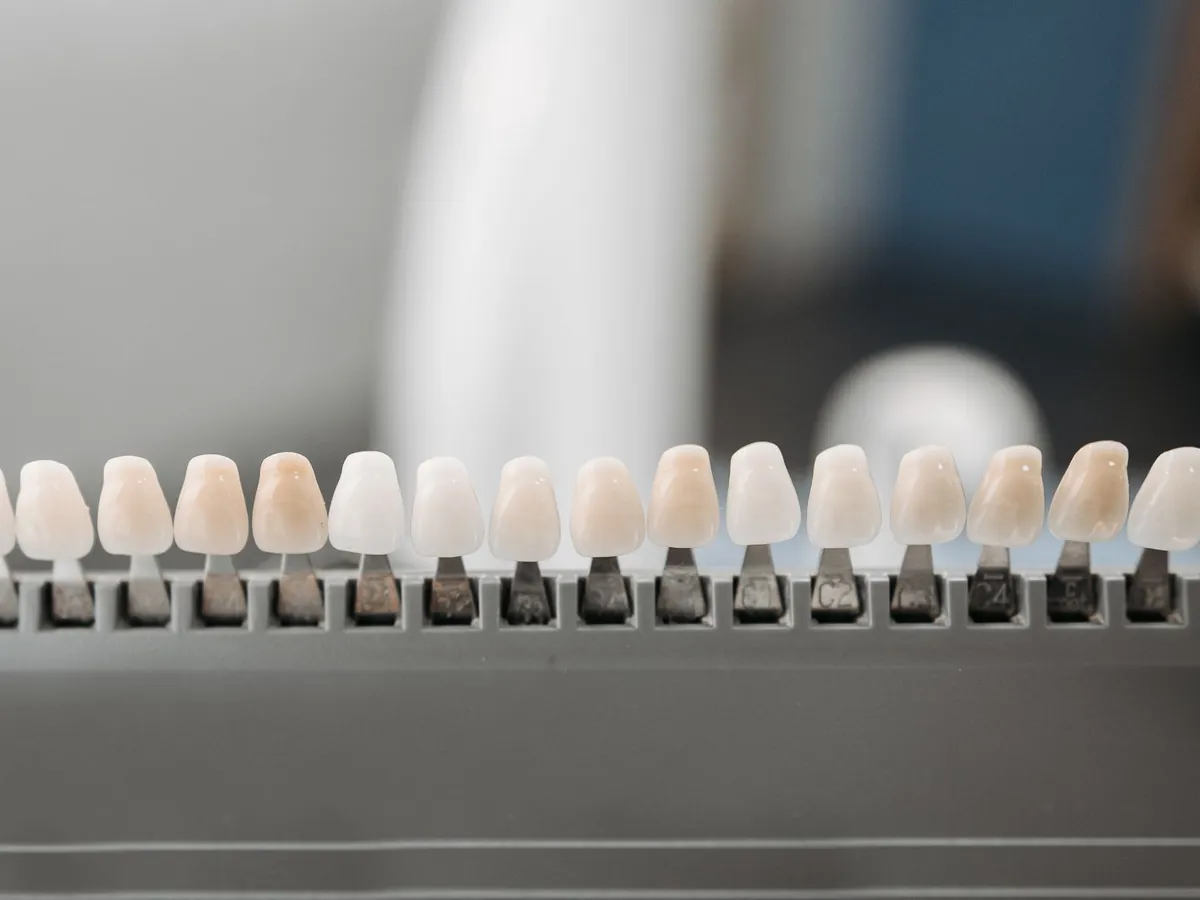
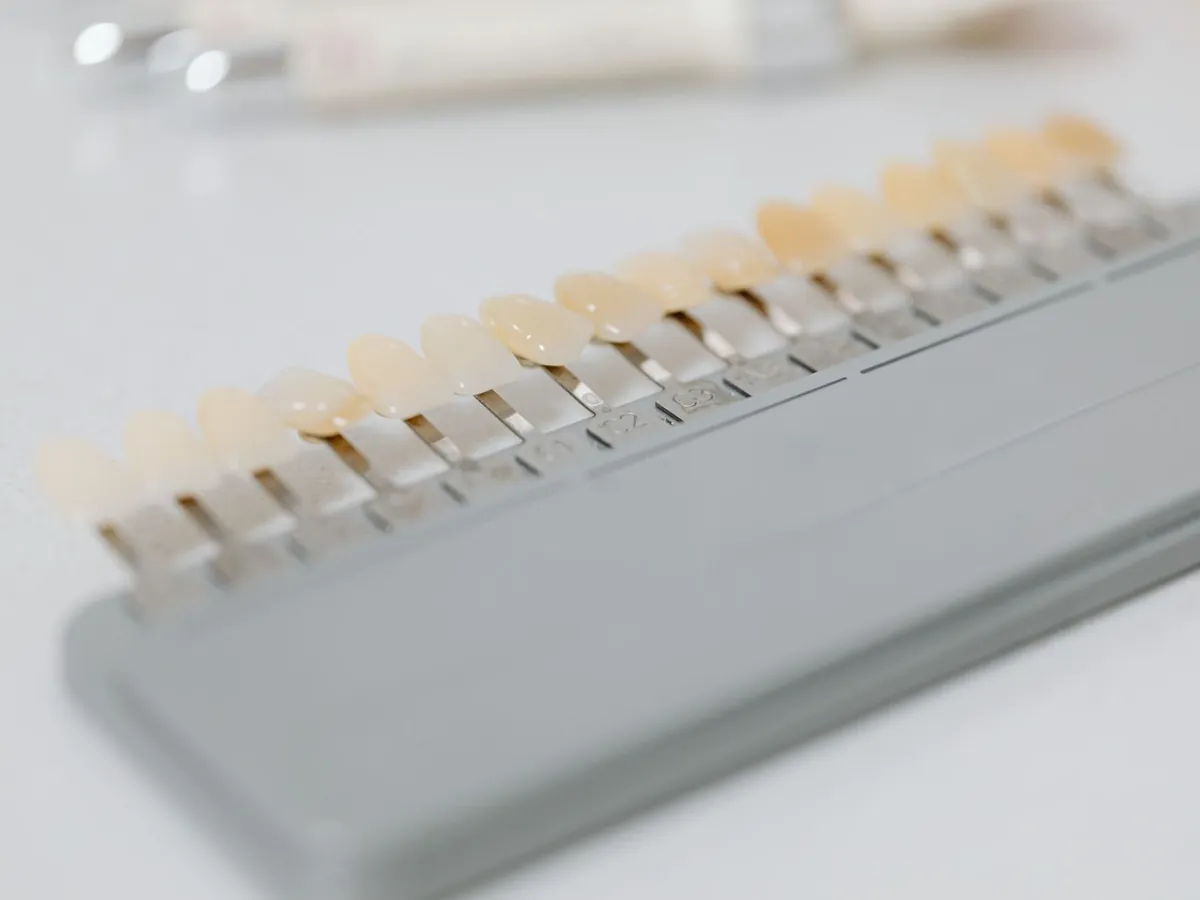
A shade guide is used to match your natural teeth; then the tooth surface is roughened slightly and a liquid is applied [1].
-
Treatment visit
Building and hardening
The composite is applied, moulded and smoothed into shape, then hardened with a curing light [1].
The number of teeth and appointments depends on your plan; your dentist confirms them after examining you.
Find out whether bonding suits your teeth
Send a few photos of your smile. A dentist reviews them and replies with a personalised plan and a written quote, free of charge.
Compare your options
Composite bonding vs composite veneers vs porcelain veneers
Bonding changes part of a tooth; a veneer covers its whole front. Bonding usually removes no enamel [1]; porcelain veneers do, so they are not reversible [4]. Composite is easier to repair but stains and wears more than porcelain [1][4].
| Composite bonding | Composite veneers | Porcelain veneers | |
|---|---|---|---|
| What it covers | Part of a tooth: a chip, an edge or a gap | The whole front surface | The whole front surface |
| How it is made | Shaped directly on the tooth | On the tooth or in a laboratory | In a dental laboratory |
| Enamel removal | Usually none | Less than porcelain | Some; not reversible |
| Visits | Often one | Fewer than porcelain | More than one |
| Stain and wear resistance | Lower than porcelain | Lower than porcelain | Higher |
| If it chips | Can be repaired or redone | Easier to fix than porcelain | Harder to fix |
| Evidence | Annual failure rates 0–4.1% in front-tooth composites | 88% still in place in randomised trials | Strong and long-lasting |
Bonding: [1][2]; failure rates from a review of 17 studies [3]. Veneers: ADA [4]; composite veneer survival from a review of 7 studies, mean follow-up 24–97 months [5].
Before you decide
Limits, risks and aftercare
Bonding usually keeps your enamel, but it is not maintenance-free. It typically lasts three to 10 years before it needs touching up or replacing [1], and a review of composite on worn front teeth concluded that it needs monitoring, repairs or replacement in the long term [6]. Points to weigh:
- Staining: composite is more porous than enamel and picks up stains from coffee, tea, red wine, smoking and spices such as turmeric [2]. It resists stains less well than porcelain [1].
- Loss of shine and wear: the surface gradually loses its gloss and wears, so it needs regular polishing [2].
- Chipping and debonding: composite can chip, fracture or come away from the tooth [1][2]. Fracture was the most common reason for failure in front-tooth composites [3].
- Bite changes: added material can affect your bite, lip support and speech, so the bite must be checked [2].
- Plan the colour first: whitening is designed for natural teeth, so if you want whiter teeth, whiten them before the bonding shade is chosen.
Aftercare: keep your teeth clean, avoid biting nails, chewing pens or opening packages with your teeth, and cut down on dark drinks, acidic foods and smoking [1]. If a bonded tooth feels sharp or odd when you bite, see your dentist [1].
From our dentist
“Bonding is the treatment where I usually take nothing away: the composite is added and shaped directly on the tooth. You check it with me in the mirror, and I check your bite before you leave. Composite does pick up stains and lose its shine over the years, so polishing and the occasional repair are part of the plan. If you grind your teeth or want one stable colour across many teeth, we look at porcelain veneers as well.”
Treatment abroad
Choosing a clinic in Turkey for composite bonding
Bonding is often seen as quick and simple, yet a clinical adviser at the UK dental regulator describes recurring problems, such as bites not properly checked and grinding not identified before treatment [2]. You should understand the risks, limits, alternatives and upkeep before you agree to treatment [2]. Before you book, ask:
- Will my teeth, gums and bite be examined first, with X-rays or scans where needed?
- Will any enamel be removed, and if so, why?
- How will the shade be matched, and how will my bite be checked?
- Who can polish or repair the bonding once I am home, and what upkeep will I need?
At Vita Smile, bonding is planned by Dr. Vildan Aktamış, a general dentist who focuses on prosthodontics and aesthetic dentistry and who reviewed this page. You can put these questions to us in a free online consultation.
Questions
Composite bonding: frequently asked questions
Can't find your answer? Our coordinators are happy to help on WhatsApp.
Ask on WhatsAppHow long does composite bonding last?
Bonding typically lasts three to 10 years before it needs touching up or replacing [1]. In a review of 17 studies of front-tooth composite restorations, annual failure rates ranged from 0 to 4.1%, and fracture was the most common cause [3]. Your bite, habits such as grinding, and regular polishing all play a part [2].
How much does composite bonding cost in Turkey?
It depends on how many teeth are treated and how much composite each needs. After a free online assessment you receive a personalised plan and a written quote before you travel. See veneer prices and packages.
What is the downside to composite bonding?
Composite is more porous than enamel, so it stains more easily, gradually loses its shine and can chip [2]. It resists stains less well than porcelain and does not last as long as veneers or crowns [1]. Expect polishing, repairs or replacement over the years [2].
What teeth are not suitable for composite bonding?
Decay and other oral health problems may need treating first [1]. Bonding may be unsuitable if you grind or clench, have poor oral hygiene or cannot commit to upkeep [2]. A heavily broken or root-treated tooth is usually better protected by a crown, and crowded teeth may need orthodontics first.
Is composite bonding better than veneers?
Neither is better for everyone. Bonding usually keeps your enamel, often takes one visit and can be repaired [1][2]; porcelain veneers resist staining and wear better but need some enamel removed [4]. Bonding suits small changes, veneers larger ones. See our dental veneers page.
What our patients say
Read what our patients say about us on Google and Trustpilot.
Free consultation
Free initial consultation
Leave your details and a treatment coordinator will contact you to arrange your free online consultation.
- We get in touchWe reply to you on WhatsApp.
- You share photos or an X-rayA dentist reviews them before your consultation.
- You receive your plan & quoteItemised and free, with no obligation to book.
Sources
Studies and patient guides this page is based on.
- [1] Dental Bonding — Cleveland Clinic (medically reviewed 5 January 2026) · my.clevelandclinic.org
- [2] Mehta SB. 'Bonding boom': composite bonding insights for dental professionals — General Dental Council, 28 April 2026 · gdc-uk.org
- [3] Demarco FF, Collares K, Coelho-de-Souza FH, Correa MB, Cenci MS, Moraes RR, Opdam NJ. Anterior composite restorations: A systematic review on long-term survival and reasons for failure. Dental Materials, 2015 · doi.org
- [4] Veneers — MouthHealthy, American Dental Association · mouthhealthy.org
- [5] Lim TW, Tan SK, Li KY, Burrow MF. Survival and Complication Rates of Resin Composite Laminate Veneers: A Systematic Review and Meta-Analysis. Journal of Evidence-Based Dental Practice, 2023 · doi.org
- [6] Aziz IM, Locke M. Success and Survival of Composite Resin Restorations for the Management of Localized Anterior Tooth Wear: A Systematic Review and Meta-Analysis. European Journal of Prosthodontics and Restorative Dentistry, 2024 · pubmed.ncbi.nlm.nih.gov