Aftercare
What to Eat After Dental Implants: A Day-by-Day Guide
For the first day, eat soft, cool or lukewarm food, chew on the other side, and avoid alcohol, hot drinks and smoking. Stay with soft foods until you can chew comfortably, and keep away from hard, sharp or crunchy foods. With temporary All-on-4 or All-on-6 teeth, the soft diet often lasts longer. Your dentist tells you when to move on.
Published by Vita Smile Dental Clinic Sources (12)
Key takeaways
- Do not eat while your mouth is still numb, and avoid hot drinks and alcohol on the day of surgery [2].
- Eat only soft foods until you can chew comfortably; take care with hard, sharp foods such as nuts and crisps [2].
- In one study of immediate full-arch bridges, patients kept to a soft diet for the first 3 months [8].
- Implants in smokers had a 140% higher risk of failure than in non-smokers, in a review of 292 publications [10].

Clinically reviewed by
Oral and Maxillofacial Surgeon · Implant & Surgical Dentistry Specialist
Why food matters
Why does what you eat matter after implant surgery?
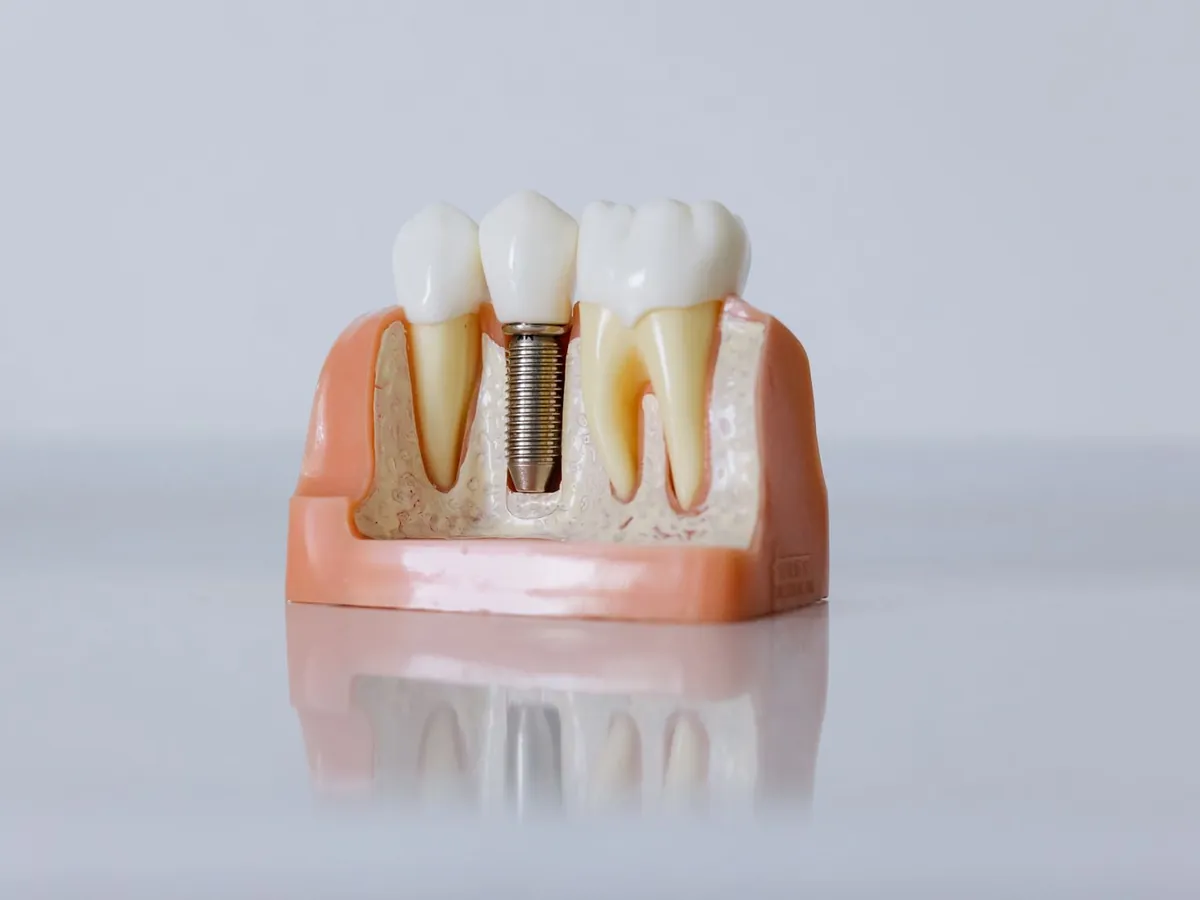
An implant is placed in the jawbone and then left to heal. This usually takes around four months [11], although the jawbone can take anywhere from three to nine months to fuse around the implant [12]. The first round of healing takes about a week [12].
During that time, food can work against you in three ways:
- Heat and alcohol on the first day can start the wound bleeding again [2].
- Hard and sharp food can hurt the wound and cause bleeding and discomfort [2].
- Pressure on a fresh implant, or on temporary teeth fixed to new implants, should be kept low while the bone heals: in one full-arch study, patients were asked to avoid overloading their new teeth [8].
The advice below comes from NHS services and clinical studies. Your own written instructions come first, because your surgeon knows how many implants you have, whether teeth were removed or bone was added, and how firm the implants were on the day.
Day by day
What to eat after dental implants, day by day
A simple guide to the first days and months. Your dentist may shorten or extend each stage after checking how you heal.
| Good choices | Avoid | |
|---|---|---|
| While your mouth is still numb | Cool drinks, sipped carefully | Eating, as you could bite your lip or tongue [2]; hot drinks, which could scald you [3][5] |
| Rest of the day of surgery | Soft, cool or lukewarm food, chewed on the other side [2][5] | Hot food and drinks and alcohol [1][2][3]; rinsing your mouth out [2][3] |
| Days 2–3 | Soft food and plenty of cool fluids [3] | Very hot, cold, spicy, sharp or crunchy food, as advised after an extraction [4]; smoking [2][3] |
| Rest of the first week | Soft food until you can chew comfortably [2] | Hard or sharp food such as nuts and crisps [2]; straws, if a tooth was removed [6] |
| Until a single implant has healed | Your normal diet as comfort allows, if your dentist agrees [1] | Anything your dentist has asked you to avoid on the implant side |
| Temporary All-on-4 or All-on-6 teeth | Soft food; one study asked for this for the first 3 months [8] | Hard food that could crack a resin tooth [8][9] |
From NHS aftercare leaflets [1]–[5], Cleveland Clinic [6] and a clinical study of immediate full-arch bridges [8]. Your dentist's instructions come first.
The first 48 hours
What can you eat in the first 24–48 hours?
Wait until the numbness has worn off before you eat, so that you do not bite your lip or tongue [2]. Then keep things soft and gentle:
- TextureSoft food that needs little chewing, such as yoghurt, soup that has cooled, scrambled eggs, mashed potato, porridge or flaked fish. One NHS dental hospital says you should be able to eat normally after an implant, but your dentist might recommend soft foods [1]; another advises soft foods only until you can chew comfortably [2].
- TemperatureAvoid hot drinks on the day of surgery, as they can start bleeding and could burn a numb mouth [2]. Cool or lukewarm is easier.
- SideChew on the other side of your mouth, away from the wound [5].
- FluidsDrink plenty of cool fluids [3].
- RinsingDo not rinse your mouth out on the first day [2][3]. One NHS implant service also asks you not to brush the implant site for a week and to use a chlorhexidine mouthwash twice a day instead [1].
If you wear a removable denture, you might not be able to wear it for up to 2 weeks after implant treatment; your dentist or nurse tells you if this applies [1]. Plan soft meals around that.
Shopping list
Easy foods to have ready before surgery
Stock up before your surgery day, so that you are not shopping while your mouth is still numb. These are examples of soft foods that need little chewing.
-
Breakfast
Soft and filling
Porridge or other soft cereal, yoghurt, scrambled eggs, smoothies eaten with a spoon.
-
Lunch
Warm, not hot
Soups left to cool, hummus, soft cheese, well-cooked pasta, soft omelettes.
-
Dinner
Protein for healing
Flaked fish, minced meat in sauce, lentils, mashed potato or vegetables.
-
Snacks
Nothing crunchy
Banana, avocado, apple purée, custard, rice pudding, cottage cheese.
Foods to avoid
Which foods should you avoid while an implant heals?
Most restrictions are about protecting the wound in the first days and keeping force off the implant while the bone heals:
- Hard and sharp foodsNuts and crisps can cause bleeding and discomfort [2]. Other hard foods, such as crusty bread or raw carrots, are best left for later too.
- Crunchy, very hot, very cold and spicy foods: after a tooth is removed, one NHS dental service advises avoiding them for the first 2–3 days [4]. Ask whether the same applies after your implant surgery.
- Small foodsRice and sweetcorn can get stuck in an extraction socket [4].
- Sticky and chewy foodsChewy foods are best avoided while an extraction site heals [6]. Leave toffee and chewing gum until your dentist says it is fine.
- Hot and fizzy drinksAfter an extraction, Cleveland Clinic advises skipping warm or fizzy drinks while you heal [6].
With a single implant, most of these limits ease once you can chew comfortably [2]. Keep chewing on the other side, and ask your dentist before biting hard on the implant side.
Drinks, alcohol and smoking
Can you drink alcohol, use a straw or smoke after implants?
- Alcohol: one NHS implant service says no alcohol for 24 hours after an implant [1]. Another NHS oral surgery unit advises avoiding alcohol for at least 3 days after a surgical procedure, as it affects healing [3]. Follow the longer advice if you also had teeth removed.
- Straws: Cleveland Clinic advises skipping straws for at least a week after an extraction, because the suction can dislodge the blood clot [6]. If teeth were removed on the day of your implant surgery, for example before full-arch treatment, this applies to you.
- Smoking: avoid it at least on the day of treatment, and ideally for a minimum of 5 days afterwards [2]. Better still, stop for good: NHS advice is to stop before treatment and in the long term [1], and a review of 292 publications found that implants in smokers had a 140% higher risk of failure [10].
- Hot drinks: let tea and coffee cool while your mouth is numb, and avoid hot drinks on the day of surgery [2][3].
After a sinus lift, the sinus also needs protecting: do not blow your nose for two weeks after the procedure [7], and contact your surgeon if you think graft material moved after a sneeze or blowing your nose [7].
All-on-4 and All-on-6
How do you eat with temporary All-on-4 or All-on-6 teeth?
With All-on-4 and All-on-6, a temporary fixed bridge is often attached soon after surgery; at Vita Smile, implants and temporary teeth can be fitted on the day of surgery in selected cases, when the implants are firmly anchored. The temporary bridge does not come out, but the implants beneath it are still healing.
That is why eating with temporary teeth needs more care than eating with a single implant:
- Soft food for longer: in one practice's study of 23 patients with immediate full-arch bridges, patients were asked to avoid overloading their new teeth and to follow a soft diet in the first 3 months [8].
- Protect the resin teeth: temporary bridges are often made of acrylic resin [8][9]. In that study, three of the 23 patients had a resin tooth fracture, repaired by the technician [8], and in a review of All-on-4 studies, fracture of the acrylic bridge was the most frequent problem with the teeth [9]. Avoid biting on hard foods with your front teeth.
- Clean after meals: food collects under a fixed bridge, so clean around it as your dentist shows you.
In the All-on-4 studies, the final bridge followed after 4–6 months in most cases [9]. With All-on-6, our typical plan fits the permanent bridge 6–8 months later. Your dentist tells you when firmer food is safe. Our guide All-on-4 vs dentures compares chewing with each option.
From our surgeon
“I don't give patients a long list of forbidden foods; one question covers most of it: do you have to bite hard, tear or crunch it? If so, it waits. For the first days, soft and lukewarm food is enough. Temporary full-arch teeth need more patience, because the implants are still healing underneath and every hard bite loads them. A cracked temporary tooth is easy to repair; an implant overloaded too early is not.”
Back to normal
When can you eat normally again after dental implants?
It depends on what was done:
- A single implantOne NHS dental hospital says you should be able to eat normally after treatment, though your dentist might recommend soft foods [1]. Most people feel like themselves within a week or so [12].
- Implants with extractionsAllow for the extraction sockets as well, with soft food and no straws in the first week [5][6].
- A sinus liftSwelling is usually at its worst after two days, and most people feel back to normal after two to three weeks [7].
- Full-arch temporary teethA soft diet for longer, in one study the first 3 months [8], until your dentist confirms the implants have healed.
In our typical plan for dental implants, the first visit to Istanbul lasts 3–7 days when no bone graft is needed, and the final teeth follow on a second trip after 3–6 months of healing. Once your final teeth are in, daily cleaning matters as much as food, because plaque around an implant can cause peri-implantitis [11]; see how long dental implants last.
Warning signs
When should you contact the clinic?
Some soreness and swelling is normal and should ease day by day. These signs are a reason to get in touch.
| What it may mean | What to do | |
|---|---|---|
| Pain that returns 3 to 10 days after surgery | Possibly a dry socket, if a tooth was removed [2] | Contact us and see a dentist |
| Swelling or pain that gets worse after two days, or a fever | Healing may not be going to plan [7] | Contact us and see a dentist or doctor promptly |
| Swelling that feels hard and hot, or you are not improving | Possible infection [2] | Contact your dentist or surgeon for advice [2] |
| Bleeding that does not stop with pressure | Ongoing bleeding from the wound [1][2] | Contact a dentist; if it will not stop, go to an emergency department [1] |
| A cracked or loose temporary tooth | Resin teeth can fracture and be repaired [8][9] | Keep any piece, avoid that side and contact us |
| Pus, swollen gums or a loose implant | Possible infection around the implant [11][12] | Contact us and see a dentist soon |
A rough guide from NHS and Cleveland Clinic advice and clinical studies; it does not replace advice from a dentist who has examined you.
After you fly home
Who helps if you have questions once you are home?
If you have treatment in Istanbul, much of the soft-food period happens at home. Your coordinator stays in touch for up to two years after you fly home, arranges remote check-ins with your dentist and advises on next steps if you have concerns; our contact page lists every way to reach us. A remote check-in cannot replace an examination, so if something needs a dentist quickly, see one near you.
Our post on aftercare after flying home covers when it is safe to fly after implants or a sinus lift. What your plan includes is listed in your written quote; see our price pages for dental implants and full-arch implants.
Questions
Eating after dental implants: frequently asked questions
Can't find your answer? Our coordinators are happy to help on WhatsApp.
Ask on WhatsAppHow soon can I eat after dental implant surgery?
Once the numbness has worn off, so that you do not bite your lip or tongue [2]. Start with soft, cool or lukewarm food and chew on the other side [2][5].
How long should I eat soft food after a dental implant?
With a single implant, until you can chew comfortably [2]; one NHS dental hospital says you should be able to eat normally after treatment, though your dentist might recommend soft foods [1]. With temporary full-arch teeth it is longer: one study asked for a soft diet in the first 3 months [8].
When can I drink alcohol after a dental implant?
Not for at least 24 hours, according to one NHS implant service [1]. Another NHS oral surgery unit advises at least 3 days after a surgical procedure [3], so follow the instructions you were given.
Can I use a straw after dental implants?
If a tooth was removed, skip straws for at least a week, because the suction can dislodge the blood clot [6]. Ask your surgeon whether this also applies to your implant site.
Planning dental implants in Istanbul?
Send a recent X-ray or a few photos of your teeth. A dentist reviews them and replies with a personalised plan and a written quote, free of charge, with your aftercare arrangements in writing. The quote is confirmed after your examination at the clinic.
Next steps
Related pages
Dental Implants
The implant process, healing time and long-term care.
Learn more
All-on-4 Dental Implants
A full arch of fixed teeth on four implants, with temporary teeth while you heal.
Learn more
Flying Home After Dental Treatment: An Aftercare Guide
When to fly after implants or a sinus lift, and staying in touch from home.
Learn more
How Long Do Dental Implants Last?
What the research says about implant lifespan, and how to make yours last.
Learn moreSources
Studies and patient guides this page is based on.
- [1] After having a dental implant — Guy's and St Thomas' NHS Foundation Trust (last reviewed December 2024) · guysandstthomas.nhs.uk
- [2] Post-operative mouth care following oral surgery — Advice sheet, Hull University Teaching Hospitals NHS Trust (ref. HEY1201/2024) · hey.nhs.uk
- [3] Instructions following Extractions & Surgical Procedures — Maxillo Facial, Head and Neck Services, Wrightington, Wigan and Leigh Teaching Hospitals NHS Foundation Trust (leaflet MX 001, version 9, October 2025) · wwl.nhs.uk
- [4] Mouth care after surgery — Oxfordshire Community Dental Service, Oxford Health NHS Foundation Trust (leaflet OH 024.25) · oxfordhealth.nhs.uk
- [5] Tooth extraction after care — Kent Community Health NHS Foundation Trust (last edited 8 November 2024) · kentcht.nhs.uk
- [6] Dry Socket — Cleveland Clinic (medically reviewed 5 May 2025) · my.clevelandclinic.org
- [7] Sinus lift procedures — Cambridge University Hospitals NHS Foundation Trust (patient information, version 3, approved July 2024) · cuh.nhs.uk
- [8] Werbelow L, Weiss M, Schramm A. Long-term follow-up of full-arch immediate implant-supported restorations in edentulous jaws: a clinical study. International Journal of Implant Dentistry, 2020 · pmc.ncbi.nlm.nih.gov
- [9] Soto-Penaloza D, Zaragozí-Alonso R, Penarrocha-Diago M, Penarrocha-Diago M. The all-on-four treatment concept: Systematic review. Journal of Clinical and Experimental Dentistry, 2017 · pmc.ncbi.nlm.nih.gov
- [10] Mustapha AD, Salame Z, Chrcanovic BR. Smoking and Dental Implants: A Systematic Review and Meta-Analysis. Medicina (Kaunas), 2021 · pmc.ncbi.nlm.nih.gov
- [11] Implants — Oral Health Foundation (updated 19 June 2026) · dentalhealth.org
- [12] Dental Implants — Cleveland Clinic · my.clevelandclinic.org